
GLP-1 Research Widens Past Weight Loss: Prostate Tumours, Cognition, GIPR Circuits
Registry entries and journal reports posted in late July 2026 put semaglutide into prostate cancer surgery and cognition studies, map where GIPR agonism and antagonism act in the brain, and document tirzepatide-specific hypersensitivity.
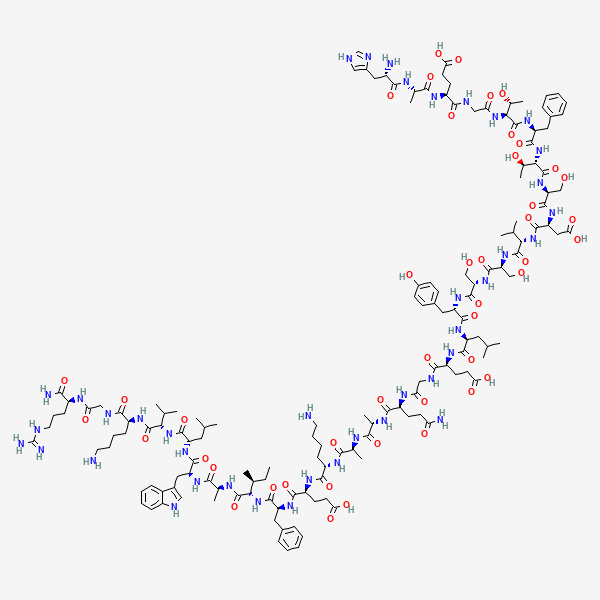
A cluster of records posted in the second half of July 2026 shows how far GLP-1 receptor agonist research has drifted from the glycaemic and weight-management indications that built the class. Within a single week, a US health system registered a trial giving semaglutide to men awaiting radical prostatectomy [1], Novo Nordisk opened a Phase 1 study on how long GLP-1 users need to fast before their stomachs are empty [2], and journals carried work on incretin effects in cognition [5], alcohol use disorder [8], and the brain circuits behind the GIP receptor paradox [3][6].
For anyone qualifying peptide material in the EU, the practical signal is not any single result. It is the widening range of molecules and comparators that appear in the same protocols: liraglutide, oral and subcutaneous semaglutide, tirzepatide, acyl-GIP, GIPR antagonist peptides, and cagrilintide now show up together in the same literature [2][3][7].
Semaglutide before prostatectomy
Banner Health has registered an exploratory, single-arm, nonrandomised trial of preoperative semaglutide in participants with intermediate-risk prostate cancer [1]. The design is Early Phase 1, interventional, with planned enrolment of 20, and the status is not yet recruiting [1]. Semaglutide will be given as a weekly subcutaneous injection according to the FDA-approved label for chronic weight management, with the listed intervention recorded as semaglutide 2.4 mg [1].
The primary aim is to explore the tumour biological activity of semaglutide in these participants; the trial also evaluates safety and tolerability of the preoperative treatment and the impact on physiologic and metabolic parameters [1]. That is an oncology question answered with a metabolic label and a 20-patient window between diagnosis and surgery — a study type that generates tissue-level readouts rather than outcomes, and one that puts a GLP-1 RA into a surgical care pathway.
Fasting duration and gastric residue
Novo Nordisk's Phase 1 study, recruiting with planned enrolment of 71, investigates how the duration of fasting and temporary discontinuation of GLP-1 medications affect the amount of food left in the stomach in people already using injected liraglutide, oral semaglutide, or injected semaglutide [2]. Participation length depends on which GLP-1 RA treatment the participant is already on [2]. All three products are listed as interventions in the same protocol [2].
The question is procedural rather than pharmacological: residual gastric content is the variable behind perioperative and pre-endoscopy guidance, and the study is structured to compare formulations and routes head-to-head on that endpoint [2].
Cognition: one completed randomised trial, one observational cohort
The LIGHT-MCI trial, an investigator-led prospective, randomised, open-label parallel study led by The Affiliated Nanjing Drum Tower Hospital of Nanjing University Medical School, is listed as completed [4]. It compared liraglutide, empagliflozin and linagliptin on cognitive function in type 2 diabetes patients with mild cognitive impairment, over a 48-week core study followed by a 28-week extension, with planned enrolment of 396 [4]. Phase is recorded as not applicable [4].
Alongside it, a paper indexed in Europe PMC reports a 24-month prospective observational study of 72 adults aged 50 or over with T2DM and MCI treated with subcutaneous or oral semaglutide, assessed at baseline and every six months, against a control cohort of 60 T2DM/MCI patients not receiving semaglutide [5]. The authors report significant reductions in body weight, BMI, waist circumference, fasting glucose and HbA1c, all at p < 0.05, and improved cognitive performance with a median MoCA change of approximately +4 points at T4 versus baseline (p < 0.001) [5]. At T4, semaglutide recipients had higher MoCA scores than controls (+4.0 vs −1.5, p < 0.001), DSST and BDI scores improved (p = 0.001 and p = 0.044), and no semaglutide-treated patient progressed to dementia versus 14 in controls (p = 0.002) [5]. In multivariable regression, semaglutide independently predicted MoCA improvement by +4.76 points (p < 0.001) [5].
The authors note that MoCA improved similarly with both formulations while DSST improvement reached significance only with subcutaneous semaglutide, suggest differences between formulations may reflect distinct central nervous system engagement, and state that randomised trials are warranted [5]. That last caveat matters: this is an observational cohort, and the randomised comparator in the same therapeutic question — LIGHT-MCI — used liraglutide rather than semaglutide [4][5].
The GIPR paradox gets a map
A Europe PMC-indexed report from Lewis and colleagues addresses why adding either a GIPR agonist or a GIPR antagonist to GLP-1R agonism causes additional weight loss [3]. Working in mice with Gipr knocked out in either the area postrema or the hypothalamus, the authors report that Gipr AP-KO mice show partial protection against diet-induced obesity and reduced responsiveness to the appetite-suppressing effects of acyl-GIP, while liraglutide's weight-loss effects were comparable in Gipr AP-KO and control mice [3]. Gipr hypo-KO mice showed normal appetite suppression by acyl-GIP but enhanced weight loss on liraglutide, and the knockout abolished the synergistic effect of a GIPR antagonist combined with liraglutide [3]. GIPR antagonism and Gipr hypo-KO also sensitised animals to cagrilintide-induced weight loss [3]. The authors conclude that the area postrema mediates the appetite-suppressing effects of GIPR agonism while hypothalamic GIP receptors underlie the ability of GIPR antagonism to enhance GLP-1R and amylin receptor agonists [3].
A companion review by Gao and Borner frames the same paradox in development terms: GLP-1R agonist efficacy remains constrained by dose-limiting gastrointestinal adverse effects including nausea and vomiting, which reduce adherence and limit escalation to maximally effective doses [6]. The authors argue the next generation must dissociate metabolic efficacy from aversive side effects, and describe GIPR agonism as acting partly through anorectic neural circuits, increased thermogenesis and attenuation of GLP-1-induced aversive effects, while GIPR antagonism may enhance GLP-1R signalling and counteract the lipogenic actions of endogenous GIP [6].
Class is not interchangeable: a hypersensitivity case
A case report indexed in Europe PMC describes a 25-year-old woman with class I obesity (BMI 32.25) who tolerated three months of tirzepatide dose escalation from 2.5 mg through 7.5 mg, losing approximately 20 lbs, then developed episodic lip angioedema and generalised urticaria over four days after her first 10 mg dose [7]. Symptoms persisted through intramuscular diphenhydramine, a five-day prednisone course and two emergency department visits with intravenous steroids, resolving only after tirzepatide discontinuation [7]. Percutaneous skin testing to tirzepatide was negative but intradermal testing at 1:10 dilution was positive with an 8 mm wheal and 8 mm flare; intradermal testing to semaglutide was negative and a supervised subcutaneous challenge with semaglutide 0.25 mg was well tolerated [7]. Earlier laboratory work had shown normal total IgE, normal C1 esterase inhibitor protein and function, and normal complement levels [7].
The authors present the case to show the diagnostic utility of intradermal testing and supervised challenge in confirming drug-specific hypersensitivity and identifying a safe alternative within the same class [7]. It is a single case, but it documents that reactivity tracked the molecule rather than the receptor target [7].
Alcohol use disorder
Klausen and Fink-Jensen's narrative review reports that only three randomised controlled trials have examined GLP-1 RAs in alcohol use disorder to date, showing reductions in alcohol cue brain reactivity and alcohol consumption, particularly among individuals with overweight or obesity [8]. The authors add that registry studies, target trial emulation analyses and real-world data consistently associate GLP-1 RA use with reduced alcohol consumption, with mechanisms provisionally attributed to modulation of reward circuitry, incentive salience, gastric emptying and metabolic signalling [8]. They call for confirmation in larger, long-term randomised trials [8].
What this means for sourcing and qualification
The evidence base is fragmenting across indications faster than it is consolidating. Within one week's records, semaglutide appears in oncology [1], gastric-emptying methodology [2] and cognition [5]; liraglutide appears as a randomised comparator in cognition [4] and as the GLP-1 reference agent in murine circuit mapping [3]; and tirzepatide, acyl-GIP, GIPR antagonist peptides and cagrilintide appear as the molecules the next design questions are being asked about [3][6][7].
Two consequences follow for anyone specifying research-grade material. First, formulation and route are becoming study variables in their own right, not administrative details: the same cohort report treats oral and subcutaneous semaglutide as potentially distinct on a cognitive endpoint [5], and the Novo Nordisk protocol enrols the three presentations separately [2]. Second, the hypersensitivity case is a reminder that molecules within the incretin class behave differently in ways that intradermal testing could resolve where skin-prick testing could not [7]. Documentation that identifies the specific analogue and its presentation, rather than the receptor class, is what makes these studies reproducible.
References
- Banner Health. Preoperative Semaglutide Prior to Radical Prostatectomy — clinicaltrials_gov, 2026-07-27.
- Novo Nordisk A/S. Examination of How the Duration of Fasting and Temporary Stopping of GLP-1 Medications Affect the Amount of Food Left in the Stomach in People Using Liraglutide (Injected), Semaglutide (Taken by Mouth) or Semaglutide (Injected) — clinicaltrials_gov, 2026-07-21.
- Lewis JE, Montaner M, Nuzzaci D, James-Okoro PP, Harada N, Inagaki N, Dodson WS, Knerr PJ, Douros JD, Gribble FM, Reimann F.. Distinct brain regions mediate regulation of food intake in response to GIPR agonism or antagonism — europepmc, 2026-07-24.
- The Affiliated Nanjing Drum Tower Hospital of Nanjing University Medical School. LIGHT-MCI Trial: GLP-1 Agonist, SGLT2 Inhibitor, and DPP-4 Inhibitor for MCI Remission in Type 2 Diabetes — clinicaltrials_gov, 2026-07-23.
- Cassataro G, Scriffignano S, Geraci G, Augello G, Grasso MA, D'Ippolito ME, Puleo MG, Cadelo M, Renda M, Tuttolomondo A.. Impact of semaglutide on cognitive function in patients with type 2 diabetes and mild cognitive impairment: a 24-month observational study — europepmc, 2026-07-23.
- Gao SX, Borner T.. One receptor, two opposite approaches: efficacy and tolerability of GIPR agonism and antagonism in obesity pharmacotherapy — europepmc, 2026-07-23.
- Nejat C, Lin R, Addo D, Cuenca-Sisko K, Lee-Wong M.. Hypersensitivity Reaction to Tirzepatide With Demonstrated Tolerance to Semaglutide: A Case Report — europepmc, 2026-07-22.
- Klausen MK, Fink-Jensen A.. Therapeutic Potential of Incretin-Based Therapies for Alcohol Use Disorder - A narrative review of available clinical evidence — europepmc, 2026-07-22.