
Semaglutide Withdrawal Trial Asks Whether Tapering Beats Stopping Cold
A randomised protocol published in late July sets gradual semaglutide dose reduction over 16 weeks against abrupt cessation, with body weight change as the primary outcome — one of six semaglutide readouts landing in a single week.
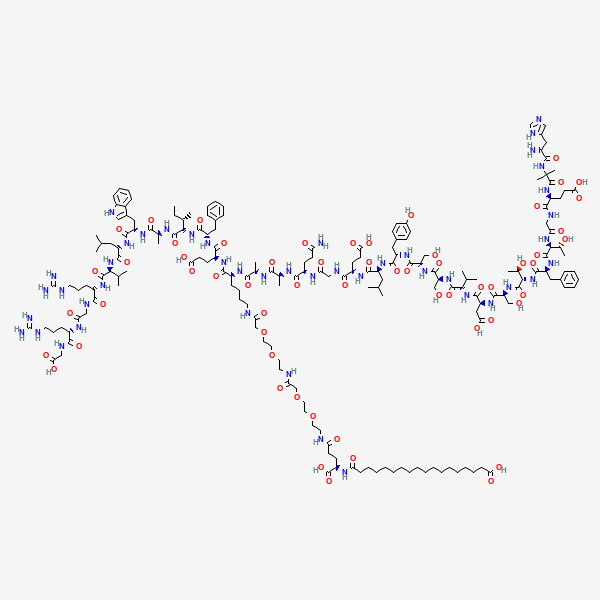
A trial protocol published on 30 July frames a question the semaglutide literature has largely stepped around: what is the right way to stop. The REST trial, registered as NCT07294950, will randomise people living with obesity and without preexisting cardiovascular disease — all currently receiving semaglutide for weight management, all having achieved at least 10% prior weight reduction with no further loss over the past 12 weeks — to either a gradual dose reduction over 16 weeks or immediate discontinuation [6].
The primary outcome is the difference in percentage body weight change between groups. Secondary outcomes are 24-hour ambulatory blood pressure and fasting ghrelin [6]. The investigators' stated rationale is that most individuals regain weight after abrupt withdrawal of semaglutide, with reversal of its beneficial cardiometabolic effects [6].
For anyone qualifying GLP-1 material or building a research programme around the class, the protocol matters less for its hypothesis than for what it concedes. Discontinuation strategy is now treated as a formal research question with its own randomised design, which means dosing schedules in downstream preclinical and comparator work can no longer assume a single steady-state exposure profile as the only condition worth modelling.
Six readouts in five days, and only one of them is about weight
REST arrived inside a cluster. Between 27 and 30 July 2026, semaglutide appeared in a registry entry on prostate cancer surgery, a metabolomics substudy in people with HIV, a meta-analysis in schizophrenia, a rat mitochondrial study, an alcohol use disorder trial, and a computational design paper on triple-receptor peptides [1][3][4][7][8][2]. The spread is consistent with the widening we noted earlier in the month GLP-1 Research Widens Past Weight Loss: Prostate Tumours, Cognition, GIPR Circuits.
Banner Health has registered an exploratory, single-arm, nonrandomised early phase 1 trial of preoperative semaglutide before radical prostatectomy in participants with intermediate risk prostate cancer [1]. Planned enrolment is 20, status is not yet recruiting, and the intervention is listed as Semaglutide 2.4 mg administered as a weekly subcutaneous injection according to the FDA-approved label for chronic weight management [1]. The primary aim is to explore tumour biological activity, with safety, tolerability and physiologic/metabolic parameters as further endpoints [1].
The design carries the usual caveats of its class — single arm, 20 participants, exploratory — but the choice to dose at the approved weight-management strength rather than a bespoke oncology schedule is the operationally relevant detail. It keeps the exposure question anchored to an established label rather than opening a new dose-finding problem.
Liver disease: clinical staging and a mechanistic candidate
Two of the week's papers concern metabolic dysfunction-associated steatotic liver disease from opposite ends of the evidence chain.
The SLIM LIVER analysis (ACTG A5371) was an open-label, phase 2b, single-arm trial of semaglutide in people with HIV and MASLD, run 2021–2022 [3]. Thirty-six participants who showed clinical response — defined as more than 2.27 kg weight loss — had serum analysed by the OWLiver metabolomics panel [3]. Twenty-four weeks of low-dose semaglutide produced significant improvement in MASLD disease severity by serum metabolomic profiling across all severity categories, which the authors read as suggesting histologic improvement [3]. Their conclusion is a methodological one: the OWLiver algorithms can be used to monitor MASLD severity during GLP-1 receptor agonist therapy [3].
Underneath that, a rat study reported on 29 July looked at hepatic mitochondria [7]. Male Wistar rats were fed a high-fat/fructose diet with L-NAME for eight weeks, then randomised for a further eight weeks to semaglutide (n=10), PYY3-36 (n=7), semaglutide plus PYY3-36 (n=10), food restriction (n=4) or saline control (n=17) [7]. Hepatic inflammation and histological MASLD score were significantly mitigated by semaglutide and by PYY3-36, with additive effects in the combination group [7]. The combination arm showed declining mitochondrial respiration, decreased mitochondrial H₂O₂ production and reduced hepatocellular stress, while food restriction and weight loss alone had no significant impact on mitochondrial respiration or OxPhos-regulating genes [7].
That last comparison is the one to hold onto. The mitochondrial effect in this model did not track weight loss, which argues the mechanism is not simply a downstream consequence of caloric deficit [7].
Psychiatry: two signals of different strength
A systematic review and meta-analysis posted 27 July pooled seven randomised controlled trials and 446 participants on semaglutide and other GLP-1 receptor agonists for antipsychotic-associated metabolic dysfunction in schizophrenia spectrum disorders [4]. The protocol was prospectively registered in PROSPERO (CRD420251248437) and followed PRISMA 2020 [4]. Body weight fell significantly against control (−6.10 [95% CI: −12.10 to −0.10], P=0.05), with significant reductions also in body mass index, waist circumference and fasting plasma glucose [4]. Heterogeneity was substantial at I²=99%, effects on lipid, insulin-related and blood pressure outcomes were inconsistent and generally not significant, and GRADE certainty ranged from low to moderate [4]. Serious adverse events were less frequent in the intervention group [4]. The authors call for larger trials with longer follow-up before the conclusions can be strengthened [4].
Separately, a phase 2 double-blind randomised trial of oral semaglutide in 50 treatment-seeking adults with moderate to severe alcohol use disorder missed its primary endpoint of laboratory-based cue-elicited craving at week 6, and did not significantly reduce drinks per day [8]. It did significantly reduce heavy drinking days (b=−0.580, 95% CI −1.012 to −0.148), drinks per drinking day, naturalistic craving and cannabis use days [8]. We covered that readout separately Oral Semaglutide Cuts Heavy Drinking Days in Phase 2 AUD Trial.
Design work moving upstream
The week's outlier is computational. A paper published 30 July uses sequence-derived in silico mutagenesis to design single-molecule peptides with triple-receptor agonist activity at GLP-1R, GCGR and GIPR, referencing tirzepatide and semaglutide as the current peptide therapeutics targeting the neuroendocrine system [2]. The authors model binding to the receptor triad through long repeat molecular simulations and effective binding enthalpy calculations, and report a predicted balanced, highly favourable binding enthalpy profile across all three receptors relative to endogenous and experimental reference peptides [2]. The peptides were further engineered for metabolic stability by substituting sites prone to proteolytic cleavage [2]. The stated aims include testing whether gastrointestinal adverse effects can be reduced and supporting future lower-dose oral formulations [2]. This is predicted, not measured — the paper positions itself as a computational design strategy preceding synthesis and activity testing [2].
What this means for sourcing and qualification
Three practical consequences follow from the week's record.
First, the range of models in which semaglutide is now being characterised — prostatectomy, HIV-associated MASLD, obese rat liver, schizophrenia, AUD — means comparator and reference material is being called on across therapeutic areas with very different analytical expectations [1][3][4][7][8]. Purity and identity specifications written for a metabolic protocol do not automatically carry.
Second, the taper question raised by REST implies programmes will increasingly need material availability across a descending dose sequence rather than a single strength [6].
Third, the design literature is moving toward multi-receptor peptides with deliberate proteolytic-cleavage-site substitutions [2]. Where those sequences reach synthesis, the impurity profiles will not resemble those of the parent GLP-1 agonists, and analytical methods will need to be developed rather than transferred.
A narrative review published 27 July notes that semaglutide, in patients with established cardiovascular disease, reduces major cardiovascular events, and argues that access to GLP-1 receptor agonists in primary care is constrained by provider training gaps, clinical inertia, weight bias, high treatment costs and fragmented insurance coverage [5]. The review warns of a two-tiered treatment landscape in which access reflects socioeconomic advantage rather than clinical need [5]. That is a health-systems argument rather than a supply-chain one, but it sets the demand context against which every trial above is being read.
References
- Banner Health. Preoperative Semaglutide Prior to Radical Prostatectomy — clinicaltrials_gov, 2026-07-27.
- Vishnoi S, Hudson S, Bhattacharya S, Thompson D.. Design of a metabolically-stable peptide therapeutic with triple-hormone-receptor agonist activity — europepmc, 2026-07-30.
- Lake JE, Kitch DW, Kantor A, Mayo R, Belaunzaran-Zamudio P, Fichtenbaum CJ, Brown TT, Corey KE, Sattler F, Erlandson KM.. Semaglutide improves MASLD and MASH in people with HIV: The SLIM LIVER study — europepmc, 2026-07-28.
- Abbas N, Memon AA, Zulfiqar R, Noon AZ, Abbas Shah SM, Panhwar K, Sadia Z, Khan MS, Akbar MB, Iftikhar S, Hayat I.. Semaglutide and Other GLP-1 Agonists for Antipsychotic-Associated Metabolic Dysfunction in Schizophrenia: A Systematic Review and Meta-Analysis — europepmc, 2026-07-27.
- Ahmed MM, Nazari R, Othman ZK, Musa SS, Okesanya OJ, Adebayo UO, Branda F, Elmi AH, Lucero Prisno DE.. GLP-1 receptor agonists in primary care: readiness, equity, and the risk of a two-tiered obesity treatment landscape — europepmc, 2026-07-27.
- Yevusiak T, Weisman A, Retnakaran R, Wharton S, Drucker DJ, Kramer CK.. Impact of semaglutide withdrawal on cardiometabolic profile and physiology of energy balance: Recovery effects after semaglutide termination - The REST trial study protocol — europepmc, 2026-07-27.
- Geiger N, Nickel AG, Kohlhaas M, Federspiel J, Gerner J, Landthaler AN, Kloock S, Bischler T, Arampatzi P, Matz M, Zytner P, Kircher S, Sequeira V, Fassnacht M,. PYY<sub>3-36</sub> potentiates Semaglutide‑mediated mitochondrial modulation in MASLD — europepmc, 2026-07-29.
- Schacht JP, Sakai JT, Raymond K, Shelton R.. Oral Semaglutide for Alcohol Use Disorder: A Randomized Clinical Trial — europepmc, 2026-07-29.