Tirzepatide's November Literature Moves to What Happens After the Weight Comes Off
Three registry entries and five Europe PMC reports indexed in early November put tirzepatide into post-bariatric rescue, ocular imaging, resistance training, alcohol use disorder and a severe hyponatremia case — not weight loss efficacy.
Not one of them is a weight-loss efficacy readout. They are about what happens around the drug: what to do when it fails, what it does to the eye, what it does to sodium, whether it changes drinking behaviour, and how to see where it goes in the body.
For anyone qualifying peptide material in the EU, the direction of travel matters more than any single result. The questions being asked of tirzepatide have moved from the primary endpoint to the periphery, and peripheral questions are the ones that generate analytical and documentation requirements.
Two trials ask what tirzepatide does not do alone
Vanderbilt University Medical Center has a phase 2/3 pilot, now active and not recruiting, testing tirzepatide in patients with persistent obesity — BMI over 30 — twelve months after Roux-en-Y gastric bypass [1]. Patients taking tirzepatide at that point are compared against continued standard of care after gastric bypass, with planned enrolment of 30 and side-effect frequency in this population as a stated aim [1].
The inverse question appeared in the literature the same week. Aminian and colleagues report on two-year weight loss after bariatric surgery in adults who had intolerable adverse effects or inadequate weight loss on semaglutide or tirzepatide, framing surgery as a rescue strategy and noting plainly that the two drugs are effective obesity medications but that intolerance and inadequate response occur [8].
Surgery after drug, drug after surgery.
The Technical University of Munich has registered RESIST-MIND, an ancillary study to the RESIST trial, in which adults with obesity receive tirzepatide and are randomised to structured resistance training or usual care for 24 weeks [3]. The ancillary study, not yet recruiting with planned enrolment of 150, explores whether resistance training during tirzepatide treatment is associated with changes in attention and concentration, food-related thoughts described as "food noise", food craving, fatigue, sleep quality, everyday functioning, work ability and exercise motivation [3]. It also asks whether preserving muscle mass and strength during weight loss relates to those changes [3]. No additional visits, interventions or biological samples are involved [3].
That endpoint set is unusual. Attention testing and work ability are not standard obesity-trial outcomes, and the explicit link to muscle preservation puts lean mass at the centre rather than treating it as a safety footnote.
Ocular imaging and a sodium case report
Istanbul University is recruiting 40 participants into a prospective observational study of ocular structural and microvascular changes in adults with obesity receiving semaglutide or tirzepatide in routine care, with and without type 2 diabetes [2]. Participants undergo ophthalmologic examination at baseline and follow-up over a period of up to 18 months, with optic nerve head parameters, retinal thickness, retinal and choroidal microvascular parameters and choroidal thickness assessed by optical coherence tomography, OCT angiography and other routine methods [2].
The sharpest safety item of the week is a single case. Prasad reports a woman with type 2 diabetes and morbid obesity, on regular insulin and chronic torsemide, who presented with anorexia, weakness and drowsiness ten days after tirzepatide administration [5]. Serum sodium was 104 mmol/L and she was clinically euvolemic, with calculated serum osmolality of 224 mOsm/kg and normal renal, hepatic, hematologic, acid-base and other endocrine parameters [5]. Urinary sodium remained elevated after the diuretic was withdrawn [5]. She was managed with fluid restriction and hypertonic saline, with progressive correction of sodium and clinical improvement [5].
The author's proposed mechanism is that gastrointestinal adverse effects of incretin-based therapies can influence water balance through nonosmotic vasopressin release and reduced oral solute intake, and the report recommends considering electrolyte monitoring in patients on incretin therapy who develop significant gastrointestinal symptoms or reduced oral intake [5]. It is one patient, and the report describes a potential association rather than causation [5].
Alcohol outcomes replicate across both agents
Tang and colleagues report a target trial emulation using de-identified electronic health record data from the TriNetX research network, covering June 2022 to January 2025, comparing adults with type 2 diabetes newly initiating semaglutide, tirzepatide or an SGLT2 inhibitor [7]. The primary outcome was clinically recorded hospitalisation or emergency department visits for alcohol use disorder, analysed with Cox models and 1:1 propensity score matching [7].
Over mean follow-up of 0.81 to 1.02 years, incidence rates were 2.42 versus 4.53 per 1000 person-years for semaglutide versus SGLT2i, hazard ratio 0.54 (95% CI 0.45–0.64), and 2.34 versus 3.98 per 1000 person-years for tirzepatide versus SGLT2i, hazard ratio 0.61 (95% CI 0.46–0.83) [7]. Head to head, semaglutide and tirzepatide showed no difference: 2.43 versus 2.36 per 1000 person-years, hazard ratio 0.98 (95% CI 0.73–1.31) [7]. Results held across sensitivity and subgroup analyses [7].
Digital adjuncts and a PET tracer
Davey and colleagues report a retrospective cohort of 6113 Australian adults who self-enrolled in a direct-to-consumer weight-loss programme between 1 July 2024 and 13 August 2025, receiving semaglutide or tirzepatide with optional access to a behavioural smartphone app and clinician support [4]. App users had adjusted odds ratios of 1.38 (95% CI 1.09–1.75) to 2.22 (95% CI 1.40–3.45) for achieving ≥5% weight loss, 1.67 (95% CI 1.33–2.10) to 1.97 (95% CI 1.35–2.90) for ≥10% by days 120 and 180, and 1.99 (95% CI 1.26–3.29) for ≥15% by day 180 [4]. Progress logging was the primary behavioural predictor, associated with 0.26 percentage points of additional weight lost per 30 days [4]. The authors state these are not causal effects and that differences in overall trajectories were modest [4].
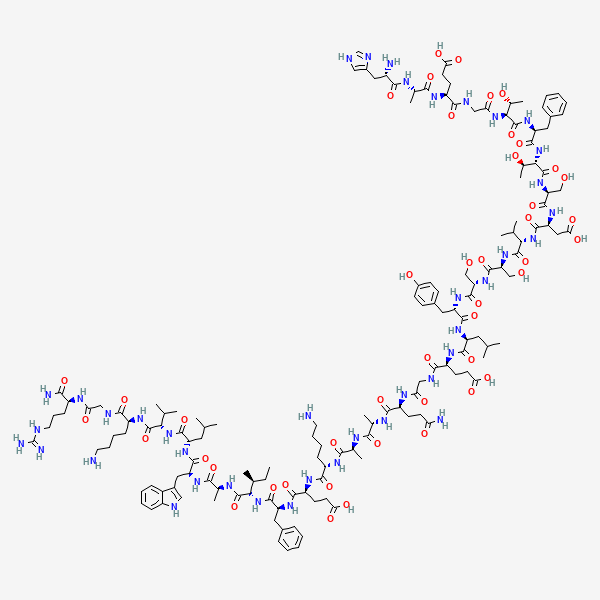
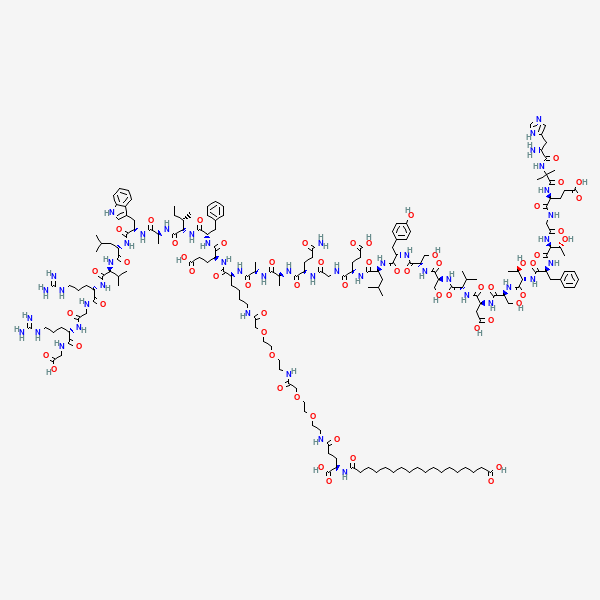
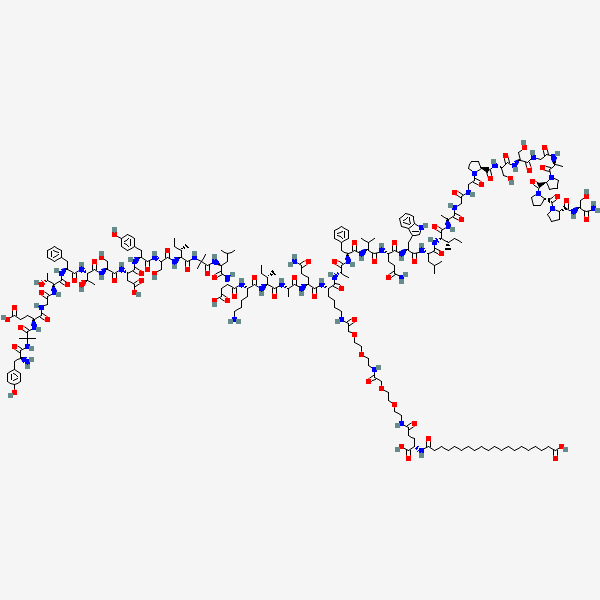
On the analytical side, Tudi and colleagues report PET imaging of dual GLP-1R and GIPR targeting using [18F]AlF-NOTA-Asp2-Tirzepatide, noting that non-invasive approaches to assess tirzepatide's in vivo biodistribution and systemic toxicity in living animals remain limited and that both receptors are potential targets in neuroendocrine contexts [6]. A radiolabelled tirzepatide analogue is a synthesis problem before it is an imaging problem — a conjugated, site-specific modification of a dual agonist backbone, with the characterisation burden that implies Three October Papers Pull at the Edges of Fmoc Solid-Phase Peptide Synthesis.
What this means for sourcing and qualification
Three of the eight items in this window involve tirzepatide used alongside something else: resistance training [3], a smartphone app [4], bariatric surgery before or after [1][8]. Two involve measuring something the label was not written around — retinal microvasculature [2] and serum sodium [5]. One is a tracer analogue [6].
For procurement and QA staff, the practical read is on specification scope. Research programmes framed around ocular imaging, electrolyte handling or receptor biodistribution ask different questions of reference material than efficacy work does: identity and purity documentation has to support analytical methods the sponsor may not have named at enquiry stage. Asking what the material is being characterised against, not only what it is, is the cheaper question to ask early.
References
- Vanderbilt University Medical Center. GLP-1 Receptor Agonists Post-Bariatric Surgery (GRABS) Pilot Trial — PHASE2, PHASE3 · ACTIVE_NOT_RECRUITING, 2026-11-10.
- Istanbul University. Ocular Changes in Patients Using Tirzepatide or Semaglutide — RECRUITING, 2026-11-09.
- Technical University of Munich. Functional, Cognitive, and Behavioral Correlates of Resistance Training During Tirzepatide-Induced Weight Loss — NOT_YET_RECRUITING, 2026-11-10.
- Davey B, Dabash O, Khanna R, Cornell PY, Huckvale K. Digital Augmentation of Glucagon-Like Peptide-1 for Obesity Management: Retrospective Study — europepmc, 2026-11-03.
- Prasad NT. Tirzepatide-associated severe euvolemic hyponatremia with syndrome of inappropriate antidiuretic hormone secretion-compatible biochemical features — europepmc, 2026-11-02.
- Tudi K, Jie Z, Chen Z, Liao W, Liu Y, Tang G. PET Imaging of Dual GLP-1R and GIPR Targeting with [18F]AlF-NOTA-Asp2-Tirzepatide — europepmc, 2026-11-01.
- Tang H, Zhang B, Lu Y, Lu Y, Wang H, Davis CN, Kranzler HR, Chen Y. Semaglutide, Tirzepatide and Clinically Recorded Alcohol-Related Outcomes in Type 2 Diabetes: A Target Trial Emulation — europepmc, 2026-11-03.
- Aminian A, Hammad AF, Sadeghmousavi S, Daftari G, Ferguson L, Tu C, Gasoyan H, Nissen SE. Bariatric Surgery as a Rescue Strategy After Semaglutide or Tirzepatide — europepmc, 2026-11-03.