
Six AMP Papers in One Week Put Production Route Ahead of Sequence Novelty
Between 14 and 19 November, Europe PMC indexed six antimicrobial peptide reports. Two recombinant expression studies, two AI design frameworks and two mechanism papers all run into the same constraints: stability, toxicity and the cost of synthesis.
Compounds in this post
LL-37€794/g≈+0.3% 7d≈-5.1% 30d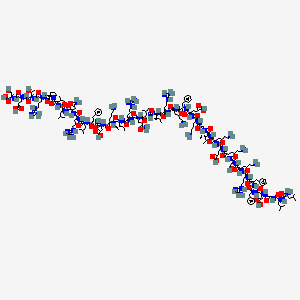
Two of them produced their peptide recombinantly rather than by chemical synthesis and said so in the abstract. Two more are design frameworks whose stated purpose is to rank candidates before anyone commits synthesis capacity to them. The remaining two are mechanism papers on peptides that have been known for years.
For anyone qualifying peptide material, the relevant signal is where the bottleneck has moved. The reviews in this batch name it directly.
Both reviews name manufacturing cost as a translation constraint
A review of AMP development within a design-build-test-learn framework states that AMP translation remains constrained by poor physiological stability, host toxicity, and manufacturing costs [1]. It places solid-phase synthesis, engineered microbial hosts and cell-free systems side by side as the routes that convert selected sequences into testable molecules [1]. The authors argue that activity must be optimised together with toxicity, stability, manufacturability and delivery rather than treated as the sole measure of success, and they list scale-up and assay comparability among the remaining limitations [1].
A second review, framed around next-generation antimicrobials for what its authors call the post-antibiotic era, reaches a similar inventory of problems: low bioavailability, inadequate in vivo stability, and potential toxicity concerns [4]. It covers sources spanning naturally occurring biopeptides and synthetic peptides predicted by artificial intelligence, and describes mechanisms including disruption of bacterial cell membranes, interference with cell wall synthesis, and inhibition of key metabolic pathways [4]. Its remedies are sequence optimisation and peptide-compound conjugation [4].
Neither review is reporting a new result.
Two groups skipped chemical synthesis entirely
The clearest manufacturing signal in the batch comes from an AI-design paper that explicitly declined to synthesise its lead. The authors cite the cost of solid-phase synthesis as one of three constraints on the AMP class, alongside proteolytic instability and host toxicity [7]. Their design targeted FtsZ, the essential bacterial cell-division GTPase, at a consensus epitope at residues 60-145 that their alignments show is 68.6% identical between Enterococcus and Klebsiella orthologues against 50.1% for FtsZ overall, while sharing only approximately 8-24% identity with human tubulin [7].
A sequence-space diffusion model conditioned on the amino-acid composition of validated AMPs generated ten binders; fusion to 120 cell-penetrating motifs followed by machine-learning triage, co-folding and replicated molecular dynamics produced a single lead, Combined111 [7]. The codon-optimised gene was cloned into pHT254 and expressed as an intracellular C-terminal 8xHis-tagged product in the protease-deficient Bacillus subtilis WB800N host, giving a mean transcript induction of 3.40-fold (SD 2.01, n = 4 biological replicates) and a single band of approximately 11.1 kDa after one-step Ni-NTA purification [7].
The authors are unusually candid about what the data do not establish. Against one pan-drug-resistant clinical isolate of each of seven species, the purified peptide produced larger inhibition zones than a panel of last-resort antibiotics for five of seven, by a mean of 4.81 mm, but the difference was not statistically significant (95% CI -0.64 to 10.27; t(6) = 2.16, p = 0.074) [7]. FtsZ-directed inhibition is presented as a hypothesis rather than an established mechanism, with no direct binding measurement, polymerisation or GTPase assay, or Z-ring localisation experiment performed [7]. Minimum inhibitory concentrations, resistance selection, haemolysis, mammalian cytotoxicity and in vivo efficacy all remain to be established [7].
The second recombinant paper is further along on characterisation. Two candidate AMPs from Octopus sinensis, OsBDF and OsGAP1, were expressed and affinity-purified in an Escherichia coli system [8]. OsBDF carries a conserved Defensin-Big domain and six cysteine residues forming three intramolecular disulfide bonds [8]. The more active candidate, rOsBDF, showed broad-spectrum activity against E. coli, Vibrio parahaemolyticus, Staphylococcus aureus and Bacillus subtilis at an MIC of 12-24 μM, remained stable across 25-80 °C and pH 3.0-11.0, and showed no obvious cytotoxicity to HEK293T cells, Larimichthys crocea muscle cells or erythrocytes at up to 48 μM [8]. Mechanistically it disrupts bacterial membrane integrity rather than binding genomic DNA [8]. The authors position it as a candidate for aquaculture antibacterial agents [8].
A three-disulfide defensin fold is a specification point, not a footnote. It is the kind of structural feature that determines whether a recombinant route is viable at all, and it is why the two papers in this batch that chose expression over synthesis chose different hosts.
Prediction tools are being benchmarked on potency, not just classification
GeoMIC, a two-stage framework combining protein language model embeddings with predicted peptide geometry, reported an AUROC of 0.844 on XUAMP and MIC prediction correlations of 0.794 for Staphylococcus aureus and 0.797 for Escherichia coli [2]. Capacity-matched ablations supported complementary contributions from predicted structure, and retrospective ranking recovered more known active peptides than the evaluated comparator [2].
Mechanism work on known peptides goes to selectivity
Two papers in the batch concern peptides already well described. A review of buforin IIb, a 21-residue AMP engineered from buforin II, traces a helix-hinge-helix architecture organised around a single proline residue and the peptide's capacity to cross membranes with limited lytic disruption and engage intracellular targets [3]. The engineering strategies it catalogues — MMP-activatable prodrugs, BR2-based delivery, nanoparticle and metal bioconjugates, N-terminal lipidation — are all aimed at limited in vivo stability, incomplete cancer selectivity and haemolytic activity at high concentrations [3]. The review closes on stability, selectivity, pharmacokinetics and scalable manufacturing as the translational blockers [3].
A preprint, not peer reviewed, reports all-atom molecular dynamics and umbrella sampling on the interaction between E. coli O111:B4 LPS and the cationic AMP GL13K, with two single-point mutants at position 9 [5]. Wild-type GL13K showed the strongest unbinding free-energy barrier; the S9A substitution redirected the N-terminus from lipid A toward the core oligosaccharide and substantially reduced the barrier, while S9T maintained a similar affinity [5]. The point for anyone writing a specification is that a single conservative substitution at a distal position changed binding behaviour measurably [5].
A second preprint, also not peer reviewed, runs in the other direction: it treats the human AMP LL-37 as the problem rather than the agent, reporting that apolipoprotein A-I acts as a scavenger of LL-37 and attenuated imiquimod-induced psoriasiform inflammation in a mouse model and a human 3D psoriatic skin model [6].
What to take into a qualification file
That matters for incoming-material questions: a recombinantly expressed AMP carries host-cell protein, tag-removal and endotoxin considerations that a synthetic peptide does not, and the E. coli expression route used for rOsBDF [8] raises different ones from the protease-deficient B. subtilis host used for Combined111 [7].
The AI-design paper also sets a useful standard for reading claims. Its authors state plainly that target engagement was inferred computationally, that each inhibition-zone value is a single measurement, and that MICs, haemolysis and cytotoxicity are unmeasured [7]. Those are the data points a qualification file can hold.
References
- Xu Y, Xu J, Zhu W, Zhang W, Yang P, Chen R, Li X, Lin H, Luo J, Ma Y, Jiang K, Hu J. Engineering antimicrobial peptides through the design-build-test-learn framework — europepmc, 2026-11-17.
- Tang E, Sun Z, Xu S, Wang X, Kuang S, Corrie S, Peleg AY, Song J, de la Fuente-Nunez C. Structure-aware graph learning links peptide geometry to pathogen-specific antimicrobial potency — europepmc, 2026-11-17.
- Paspaliaris V, Spathakis M, Uddin MI, Kato J, Kolios G, Dovrolis N. Buforin IIb in antimicrobial and anticancer pharmacology; crossing membranes, crossing therapeutic boundaries — europepmc, 2026-11-16.
- Chen Y, Ding C, Wu H, Yang Y, Zhu Y, Peng Y, Zou A, Li Y, Li F, Liu Z, Zhang P. Antimicrobial Peptides: Engineering Next-Generation Antimicrobials for the Post-Antibiotic Era — europepmc, 2026-11-16.
- Niknam Hamidabad M, Menard J, Mansbach R. Investigating the critical role of serine in antimicrobial peptide binding to lipopolysaccharide — europepmc, 2026-11-19. (preprint — not peer reviewed)
- Koziel J, Golda A, Wong A, Kowalczyk D, Adamowicz K, Bryzek D, Satala D, Samsudin F, Bond P, Rapala-Kozik M, Potempa J, Schmidtchen A. Targeting LL-37-Driven Psoriasiform Inflammation with Apolipoprotein A-I — europepmc, 2026-11-19. (preprint — not peer reviewed)
- Yousif YI, Yaseen LQ, Suleiman AA. An AI-designed, recombinantly produced FtsZ-directed peptide with in vitro activity against pan-drug-resistant clinical isolates — europepmc, 2026-11-14.
- Chen Z, Zhou Y, Chen X, Jiang Y, Zhu Y, Zhang J, Zhang Z, Wang Y. Recombinant expression and functional characterization of the antimicrobial peptides rOsBDF and rOsGAP1 from Octopus sinensis — europepmc, 2026-11-14.