Oral GLP-1R/GIPR Dual Agonist NNC0130 Loses 4% to Injection's 12%
A phase 1 report puts oral NNC0130 at 1.6-2.2% relative bioavailability and a non-significant 4% weight loss, against 12% subcutaneously — one of several incretin readouts indexed in the first ten days of November.
Sloučeniny v tomto článku
Retatrutide€164/g≈-6.4% 7d≈-8.2% 30d
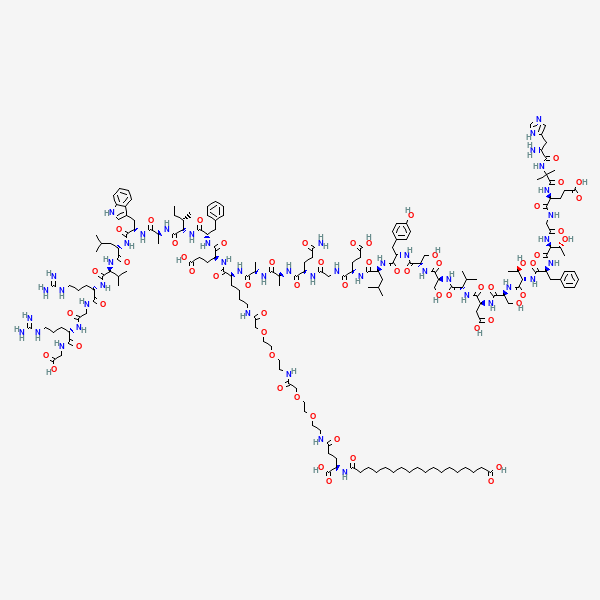
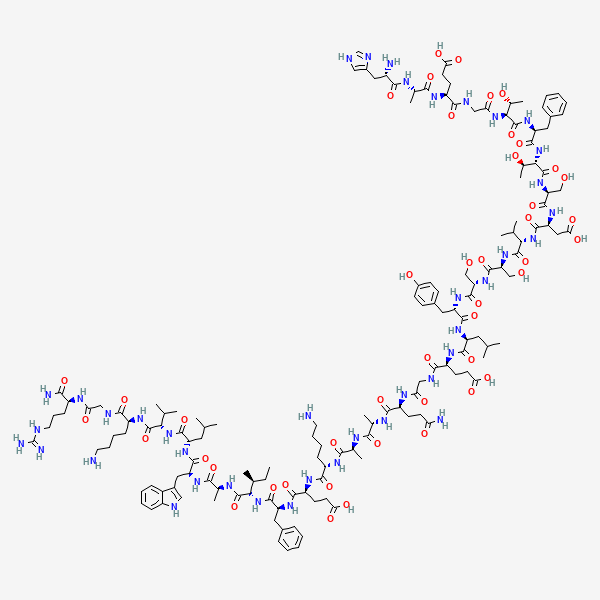
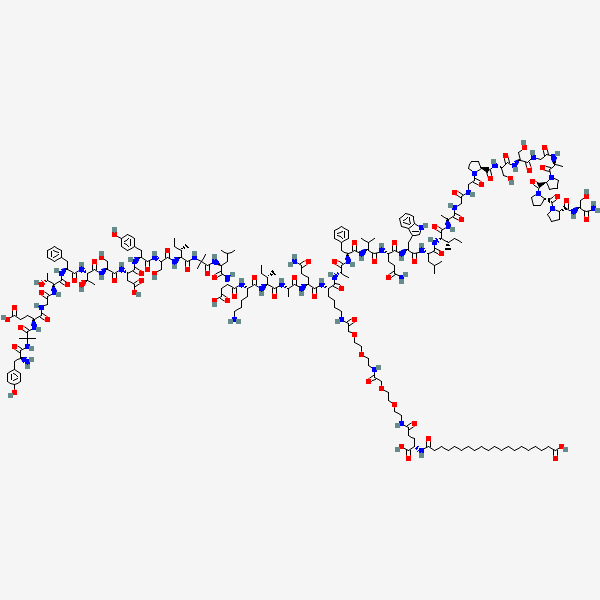
A phase 1 report on NNC0130, an acylated GLP-1 receptor/GIP receptor dual agonist, separates the molecule's pharmacology from its delivery route in unusually clean fashion [7]. Given subcutaneously at escalating doses from 0.3 to 3.0 mg daily, it produced placebo-corrected mean body weight loss of 9% at 12 weeks and 12% at 15 weeks [7]. Given orally at escalating doses from 5 to 50 mg daily and co-formulated with the permeation enhancer salcaprozate sodium, it produced 4% at 12 weeks — a figure the authors report was not statistically significantly different from zero [7].
The relative oral bioavailability was estimated at 1.6-2.2% versus subcutaneous administration [7]. The authors conclude that the modest weight-lowering efficacy of the oral route highlights the continued challenges of low oral bioavailability of acylated peptides, while the subcutaneous data motivated advancement into phase 2 [7].
For anyone qualifying peptide material, the interesting part of the report is the chemistry rather than the clinical outcome. NNC0130 was selected from a panel of unimolecular, fatty-acylated peptide dual agonists screened for receptor potencies in cell-based assays [7]. Its in vitro potency was comparable to semaglutide at human GLP-1R and to tirzepatide at human GIPR, with a chemical structure described as compatible with semi-recombinant production [7]. Its human half-life of 76-89 hours was deemed suitable for once-daily oral administration [7].
That combination — acylation, dual-receptor potency matched to two established benchmarks, and a structure designed around semi-recombinant rather than fully synthetic routes — is where the manufacturing question sits.
Where the field has got to on multi-receptor agonism
A narrative review on polyendocrine metabolic ovarian syndrome, formerly known as polycystic ovary syndrome, traces the therapeutic evolution from single GLP-1 receptor agonists to dual GIP/GLP-1 receptor agonism with tirzepatide and triple GIP/GLP-1/glucagon receptor agonism with retatrutide [5]. The authors searched PubMed for studies published between January 2023 and October 2026, supplemented by ClinicalTrials.gov and reference-list screening [5].
Their expert opinion is that semaglutide in particular improves weight, adiposity and insulin resistance, with emerging evidence of reproductive benefits, and that multi-incretin therapies may provide greater reductions in body weight, visceral and ectopic fat and insulin resistance [5]. They also state that PMOS-specific reproductive evidence remains limited, and that whether reproductive benefits are independent of weight loss, persist after treatment withdrawal, or differ across phenotypes is uncertain [5]. Phenotype-stratified randomised trials with standardised reproductive, metabolic, cardiovascular and safety endpoints are called for [5].
Genetics puts new targets under the secretory machinery
A preprint — not peer reviewed — from the Fenland Study reports genome-wide association and exome-based rare-variant analysis for immunoassay-measured GIP, GLP-1 and glucagon, at fasting and 120 minutes after an oral glucose load [6]. The authors identified 16 GWAS associations: 5 at baseline, including PDE3B with fasting glucagon, and 10 at 120 minutes, including SLC38A4 with glucagon at 120 minutes [6]. The preprint reports high expression of Slc38a4 in mouse alpha-cells, and that SLC38A4 amino acid substrates triggered calcium influx and glucagon secretion [6].
Secondary analysis of hormonal change between the two timepoints highlighted ANO1 with GIP, and the preprint states that cAMP-stimulated GIP secretion was abolished in ANO1 knockout duodenal organoids [6]. Rare-variant analysis identified 6 associations including GCGR, and links between PDE3B and both glucagon and central adiposity emerged across common and rare-variant analyses [6]. It does, however, point at secretagogue biology rather than receptor agonism — a direction genetic work on GIP has already complicated Genetic Analysis Argues for Lower GIP While Tirzepatide Agonises the Receptor.
The secretion route is also being probed clinically. A completed NIA phase 1 study with planned enrolment of 29 healthy volunteers aged 21 to 55 with BMI under 30 tested roflumilast 500 mcg and sitagliptin 100 mg, alone and in combination against placebo, across four visits with 20 blood samples over about 11 hours and a 10-hour mixed meal test [1]. The stated rationale is that both drugs may decrease blood sugar by increasing GLP-1 [1].
Indication creep and the tolerability ledger
A retrospective review at the NIH Clinical Center compared incretin therapies against metreleptin in twelve female patients with partial lipodystrophy aged 16 to 85, eleven of whom switched after a mean 104 ± 38 months on metreleptin to a mean 32 ± 13 months on incretins [3]. HbA1c was significantly lower during incretin treatment, with a mean difference of -1.1 ± 0.4% (P = .005), associated with modest weight reduction of -1.5 ± 3.9 kg (P = .046); most other metabolic parameters did not differ [3].
The FIT-HF protocol sets once-weekly subcutaneous semaglutide titrated to 2.4 mg against a low-calorie total dietary replacement of approximately 800 kcal/day in 100 adults with BMI ≥30 and left ventricular ejection fraction ≤40%, with weight-indexed peak oxygen uptake at 52 weeks as the primary endpoint [8]. The authors note that evidence in HFrEF is limited and that prior GLP-1 receptor agonist trials have raised safety concerns [8].
Two reviews address the cost side of the class. One describes delayed gastric emptying secondary to GLP-1RAs as potentially influenced by drug pharmacokinetics, associated neuropathy and tachyphylaxis with repeated dosing, and flags a theoretical risk of pulmonary aspiration from retained gastric contents in patients undergoing anaesthesia [2]. The other, on perimenopause, argues that appetite suppression, delayed gastric emptying and enhanced satiety introduce nutritional risks — reduced energy and micronutrient intake combined with estrogen deficiency raising osteoporosis and sarcopenic obesity risk [4]. Both themes extend the shift away from headline weight-loss numbers that this literature has been showing for weeks Weight Regain, Lean Mass and Hair Loss Dominate a Week of Incretin ReviewsTirzepatide's November Literature Moves to What Happens After the Weight Comes Off.
What it means for sourcing
The NNC0130 data make a specific point for anyone specifying research-grade incretin analogues: route, formulation excipient and acylation chemistry now carry as much of the pharmacology as receptor potency does. A molecule matched to semaglutide at GLP-1R and tirzepatide at GIPR in vitro still delivered 1.6-2.2% relative oral bioavailability [7]. Characterisation packages that stop at receptor binding will not distinguish materials whose behaviour diverges this sharply downstream. The simultaneous push towards secretory targets such as ANO1, SLC38A4 and PDE3B in the Fenland preprint [6] suggests the next wave of research material requests may not be receptor agonists at all.
References
- National Institute on Aging (NIA). The Role of Phosphodiesterase Inhibitors in Incretin Secretion — PHASE1 · COMPLETED, 2026-11-09.
- Harer KN, Hasler WL. What's Coming Up Next? The Physiology of Gastroparesis and GLP-1 Agonists — europepmc, 2026-11-06.
- Podyma BM, Lightbourne M, Brown RJ. Effectiveness of incretin receptor agonists compared to metreleptin in partial lipodystrophy: a retrospective study — europepmc, 2026-11-07.
- Christensen S, Hurtado Andrade MD, Sampson-Paine K, Sepulveda D, Thomas S, Robinson K, Williams DR. Nutrition Care Strategies at the Intersection of Menopause and Obesity Pharmacotherapy — europepmc, 2026-11-10.
- Ozgen Saydam B, Yıldız BO. Next-generation incretin therapeutics for polyendocrine metabolic ovarian syndrome: navigating current pipeline and clinical considerations — europepmc, 2026-11-10.
- Wareham NJ, Desoki RA, Murzynowski J, Stewart ID, Day F, Luan J, Kerrison N, Kentistou KA, Antypa M, Hodkinson T, Kaimakis V, Davison A, Aleksashina S, Rogers G. Genetic architecture of incretin and glucagon regulation revealed by genome and exome-wide analysis in the Fenland cohort — europepmc, 2026-11-09. (preprint — not peer reviewed)
- Mowery SA, Knerr PJ, Hjøllund KR, Nissen B, Olsen AK, Wilkens TL, Jakobsen LHK, Hollesen C, Breusova K, Sorrell J, Perez-Tilve D, Finan B, DiMarchi RD, de la Co. Discovery, optimization, and phase 1 evaluation of a novel, orally available GLP-1R/GIPR dual agonist — europepmc, 2026-11-03.
- El-Sheikh M, Bandholm T, Jørgensen NB, Ulrik CS, Barløse M, Møller S, Siebner HR, Grand J, Barasa A, Petersen M, Madsbad S, Yang Lee MM, Dirksen C, Hove JD. Semaglutide versus diet-based weight loss in obesity and heart failure with reduced ejection fraction (FIT-HF): Protocol for a randomized controlled trial — europepmc, 2026-11-05.