Four Compounded Tirzepatide Recalls Land as Lilly Plans a Coformulation Trial
FDA posted four Class II recalls of compounded tirzepatide/cyanocobalamin syringes on 14 October for lack of assurance of sterility, in the same week a CKD cohort, a FAERS aspiration preprint and a new Lilly phase 3 entry appeared.
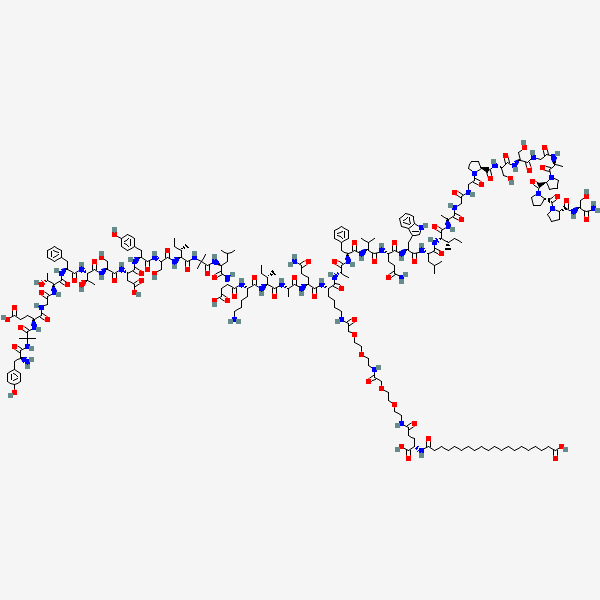
The US FDA posted four Class II recalls on 14 October 2026 covering compounded tirzepatide/cyanocobalamin injectable syringes at 26/2, 64/2, 76/2 and 85/2 mg/mL, all from Carolina Infusion, LLC [5][6][7][8]. The stated reason is identical across all four entries: lack of assurance of sterility, related to formulation using bacteriostatic water and to the processing equipment used in the compounded product [5][6][7][8]. The products were packaged in single-use dosage syringes, with the total volume dispensed based on dose [5][6][7][8].
Two things in that record matter to anyone who qualifies peptide material. The first is that the defect is not attributed to the active ingredient at all — it is attributed to the diluent choice and to equipment in the compounding process [5][6][7][8]. The second is the dose-strength spread.
The recalls here add a sterility-assurance failure mode to it, which is a facility and process question rather than a molecule question.
A real-world CKD cohort, published the same week
The cohort was multi-ethnic and followed for a median of 21.4 weeks [1].
The authors report that tirzepatide significantly reduced median weight from 103 to 100 kg, and conclude that the drug was associated with clinically meaningful improvements in weight, glycaemic control, albuminuria, lipid profile and insulin requirements without adversely affecting kidney function [1]. Collected outcomes included weight, HbA1c, eGFR, urinary albumin-to-creatinine ratio, blood pressure, lipid profile and insulin requirements [1]. The paper notes there have been limited reports on the implications of prescribing tirzepatide in a real-world cohort of patients with advanced CKD, and recommends that introduction in CKD be guided by a multidisciplinary team [1].
The framing is worth noting: tirzepatide is described as a dual GLP-1 and GIP receptor agonist with demonstrated metabolic and potential renoprotective benefits in clinical trials [1].
FAERS aspiration signal — preprint, not peer reviewed
A comparative pharmacovigilance analysis of the FDA Adverse Event Reporting System, posted to Europe PMC on 20 October and marked as a preprint that has not been peer reviewed, examined pulmonary aspiration and aspiration pneumonia reports for semaglutide and tirzepatide [4]. The preprint analysed 218 cases in total, splitting them into a single-agent semaglutide cohort (n = 132), a single-agent tirzepatide cohort (n = 79), and an independent co-reported cohort where both agents were listed as suspect products (n = 7) [4].
In the preprint's semaglutide cohort — mean age 61.1 years, SD 14.6, 48.5% female — mortality was 17.4% and hospitalisation 62.1% [4]. In the tirzepatide cohort — mean age 65.2 years, SD 15.4, 51.9% female — mortality was 16.5% and hospitalisation 53.2% [4]. Neither mortality (p = 1.000, OR = 1.071) nor hospitalisation (p = 0.2477, OR = 1.445) differed significantly between groups, according to the preprint [4]. Reports designated life-threatening were significantly more frequent with tirzepatide than semaglutide, at 17.7% versus 7.6% (p = 0.0417, OR = 0.381) [4]. In the seven co-reported cases, 57.1% required hospitalisation, with no deaths or life-threatening events reported [4].
The preprint's own methodological point is the one to keep: isolating co-reported cases prevents cross-contamination in incretin pharmacovigilance studies [4]. These are spontaneous reports, and the authors describe them as such [4]. The stated mechanistic concern is delayed gastric emptying by both agents [4].
Lilly sets tirzepatide against a coformulation
ClinicalTrials.gov carries a phase 3 interventional study, status not yet recruiting as of 19 October, in which Eli Lilly and Company will compare a coformulation of eloralintide and tirzepatide — EloraTZP — against tirzepatide alone for body weight reduction in adults with obesity or overweight and type 2 diabetes [3]. Planned enrolment is 1,000 participants and participation will last about two years [3]. The interventions listed are eloralintide and tirzepatide, and tirzepatide [3].
The comparator choice is the point. Tirzepatide is now the active control against which Lilly proposes to measure its own next-generation combination, in a trial sized at 1,000 participants [3]. That has implications for how long the molecule stays an analytical reference point in the obesity and T2DM space, independent of what the coformulation shows.
Cost-effectiveness: greater benefit, higher cost
A short-term economic evaluation indexed on 17 October modelled subcutaneous tirzepatide, semaglutide and liraglutide over 68 weeks in adults without diabetes with BMI ≥ 30 kg/m² or ≥ 27 kg/m² with at least one weight-related complication, from an Iranian payer perspective [2]. Against semaglutide, tirzepatide generated greater health benefits at higher cost, giving an incremental cost-effectiveness ratio of US$34,423.89 per QALY [2]. Liraglutide was dominated by semaglutide [2]. Semaglutide was cost-effective at the Iranian willingness-to-pay threshold, and the authors conclude that tirzepatide's higher cost limited its cost-effectiveness at current prices [2]. Deterministic and probabilistic sensitivity analyses confirmed the robustness of the findings, per the paper [2].
The jurisdiction and threshold are specific to that analysis and do not transfer.
What this means for EU qualification work
The four recalls are the actionable item. They name a cause that sits entirely in formulation and equipment rather than in the peptide: bacteriostatic water as the diluent, and the processing equipment used in the compounded product [5][6][7][8]. Anyone writing or reviewing specifications for tirzepatide material should read that as a reminder that sterility assurance is a facility control, documented separately from identity and purity data on the raw powder itself.
The surrounding literature pulls in a different direction from the recalls. A nephrology cohort reports no adverse effect on kidney function over a median 21.4 weeks [1], a not-yet-peer-reviewed FAERS analysis flags a higher proportion of life-threatening designations among aspiration reports [4], and a 1,000-participant phase 3 will use tirzepatide as its active comparator [3]. For sourcing and QA staff, the practical consequence is that reference-standard and analytical demand for this molecule is unlikely to fall — and that the quality questions worth asking suppliers are increasingly about process and containment, not about the sequence.
References
- Carruthers JE, Ooi XY, Goodall D, Reed J, Bedi R, McGrath A, Willicombe M, Avari P, Frankel AH.. Real-world observational study evaluating metabolic and kidney outcomes in patients living with chronic kidney disease and type 2 diabetes mellitus with obesity prescribed tirzepatide — europepmc, 2026-10-19.
- Reiszadeh N, Radmanesh R, Heshmat R, Mohammadi H, Darvishi A.. Economic evaluation of tirzepatide, semaglutide, and liraglutide in the treatment of obese and overweight patients without diabetes: a short-term cost-effectiveness analysis in Iran — europepmc, 2026-10-17.
- Eli Lilly and Company. A Study of EloraTZP in Adult Participants With Obesity or Overweight and Type 2 Diabetes — clinicaltrials_gov, 2026-10-19.
- Sarıca O.. Pulmonary Aspiration and Related Outcomes Associated with Semaglutide and Tirzepatide: A Comparative Pharmacovigilance Study of the FDA Adverse Event Reporting System (FAERS) — europepmc, 2026-10-20. (preprint — not peer reviewed)
- Carolina Infusion, LLC. FDA recall (Class II) — TIRZEPATIDE/CYANOCOBALAMIN 26/2 MG/ML INJECTABLE, Packaged in single-use dosage syringes, total mL dispensed based on do — openfda, 2026-10-14.
- Carolina Infusion, LLC. FDA recall (Class II) — TIRZEPATIDE/CYANOCOBALAMIN 85/2 MG/ML INJECTABLE, Packaged in single-use dosage syringes, total mL dispensed based on do — openfda, 2026-10-14.
- Carolina Infusion, LLC. FDA recall (Class II) — TIRZEPATIDE/CYANOCOBALAMIN 64/2 MG/ML INJECTABLE, Packaged in single-use dosage syringes, total mL dispensed based on do — openfda, 2026-10-14.
- Carolina Infusion, LLC. FDA recall (Class II) — TIRZEPATIDE/CYANOCOBALAMIN 76/2 MG/ML INJECTABLE, Packaged in single-use dosage syringes, total mL dispensed based on do — openfda, 2026-10-14.