Retinal Vessel Study Splits Liraglutide and Semaglutide From Exendin-4
An ex vivo porcine study reports liraglutide and semaglutide constrict retinal arterioles and dilate capillaries via nitric oxide, while exendin-4 does nothing — one of six GLP-1 reports indexed in early November.
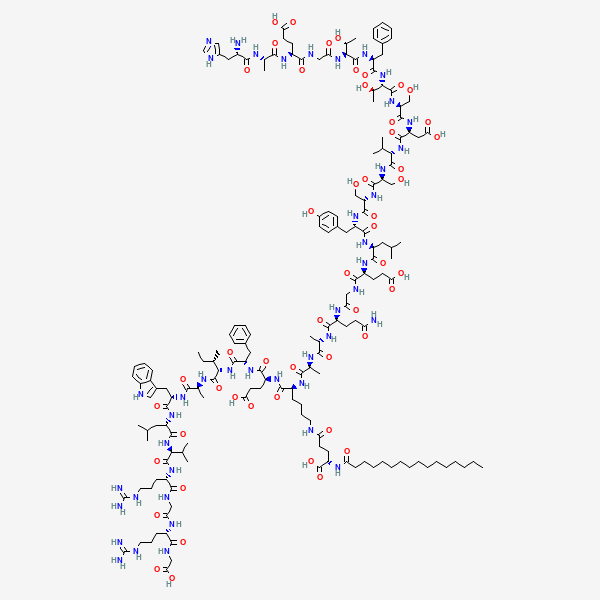
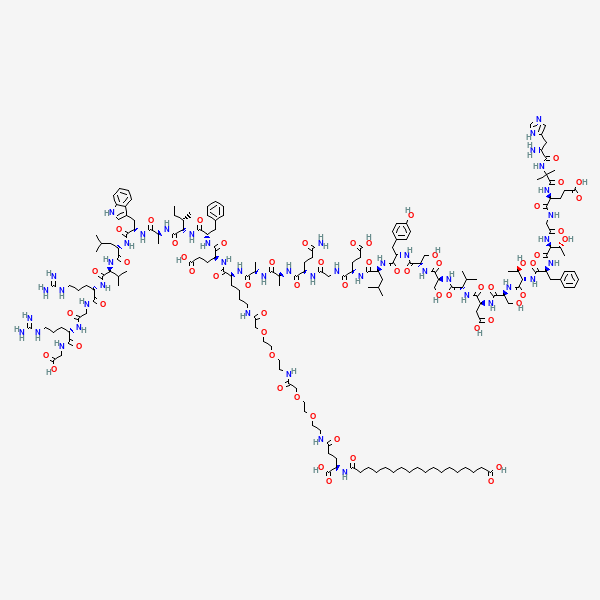
The distinction is structural rather than pharmacological class: the authors attribute the effect to agonists modified to reduce degradation and facilitate binding to plasma proteins [7].
For anyone qualifying GLP-1 analogue material, the finding is a reminder that the molecules grouped under one receptor label behave differently once albumin binding and protease resistance are engineered in. That difference shows up again, from a completely different direction, in a tirzepatide imaging paper indexed the same week [8].
What the retinal study found
Ernst and Bek studied the diameters of retinal arterioles, precapillary arterioles and capillaries in perfused porcine hemiretinas ex vivo after intravascular administration of exendin-4, liraglutide and semaglutide, alone and with the nitric oxide synthase inhibitor L-NAME [7]. Exendin-4 had no significant effect on the diameter of retinal arterioles, precapillary arterioles or capillaries, with P greater than 0.77 for all comparisons [7]. Liraglutide and semaglutide induced significant contraction of arterioles and significant dilatation of precapillary arterioles and capillaries [7].
Inhibiting NO synthesis abolished the effects, though the authors state that the specific NO synthase isoform, the downstream signalling pathway and the cellular source of NO remain undetermined [7]. Their framing is explicitly a safety one: drugs with GLP-1 agonistic effects are beneficial in diabetes and overweight but may carry increased risk of vascular complications in the retina and optic disc, and the observed vascular effects may contribute to mediating those adverse effects in clinical practice [7].
The paper is a secondary report in Europe PMC, not a regulatory finding, and the model is ex vivo porcine tissue. It does not establish a clinical signal. What it does establish is a mechanistic hypothesis that separates agonists by molecular design rather than by target, which is a more useful axis for anyone comparing analogues than the usual efficacy ranking Orforglipron's Oral Chemistry Splits the GLP-1 Field Four Ways in MCDA Ranking.
Where the fatty diacid goes
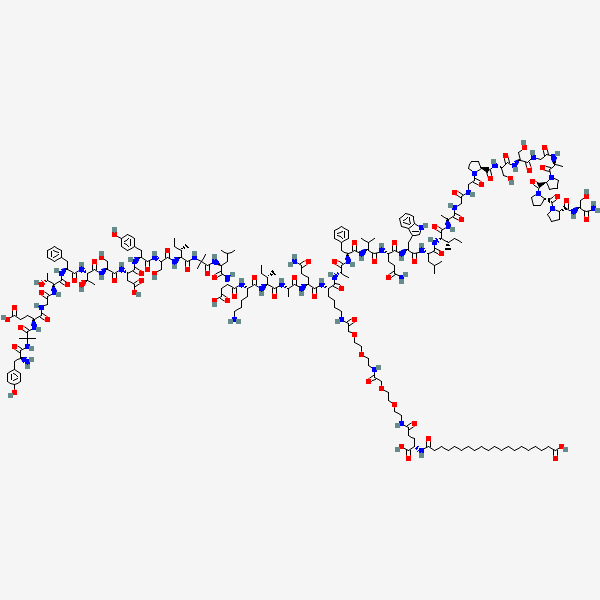
The albumin-binding theme recurs in a PET imaging report on tirzepatide [8]. Tudi and colleagues built a probe, [18F]AlF-NOTA-Asp2-tirzepatide, by structurally modifying tirzepatide, and used it to visualise the agent's in vivo distribution [8]. Tirzepatide was primarily eliminated through the renal system [8].
The C20 fatty diacid moiety caused elevated uptake in the heart, liver and blood because of enhanced albumin binding [8]. In vitro assays verified reliable GLP-1R and moderate GIPR binding affinity, and persistent tumour accumulation was observed in INS-1 and A549-GIPR xenografts [8].
Muscle, and what the weight loss is made of
A third report addresses the lean-mass question directly. Ditchfield and colleagues note that GLP-1 and GIP/GLP-1 receptor agonists produce substantial weight loss in clinical trials but that significant loss of lean body mass is reported, and ask whether this reflects a direct pharmacological effect on skeletal muscle or an indirect consequence of caloric restriction [5]. Their title states the conclusion: GLP-1 and GIP receptor agonism does not directly drive skeletal muscle atrophy or impair myogenesis in primary human myotubes [5].
That is a mechanistic negative, and it matters because the lean-mass debate has been running on clinical and pharmacovigilance data rather than cell-level evidence Weight Regain, Lean Mass and Hair Loss Dominate a Week of Incretin Reviews. A finding that the receptors are not the proximate cause shifts the question back to energy intake and activity.
The rest of the week
Three further items were indexed in the same window. Mowery and colleagues report the discovery, optimisation and phase 1 evaluation of a novel, orally available GLP-1R/GIPR dual agonist, combining incretin poly-pharmacology with advances in oral peptide delivery [2]. Oral delivery of a dual agonist is the direct successor to the oral-versus-injectable split the field has been working through Orforglipron's Oral Chemistry Splits the GLP-1 Field Four Ways in MCDA Ranking.
Osmanlli and colleagues reexamine whether the cardiovascular benefits of SGLT2 inhibitors and GLP-1 receptor agonists are direct cardiac or systemic, noting that several agents benefit patients without diabetes and that the mechanisms remain incompletely understood [4]. Davey and colleagues report a retrospective study of digital augmentation of GLP-1 therapy for obesity, on the premise that long-term outcomes depend on sustained behavioural engagement [3] — the same delivery-over-molecule emphasis seen in recent real-world work Real-World GLP-1 Papers Converge on One Thing: How Treatment Is Delivered.
On the registry side, the University of Maryland, Baltimore has completed an early phase 1 interventional study, planned enrolment 28, testing whether GLP-1 infusion changes the effects that low blood sugar has on blood vessels, against a saline placebo comparator [1]. The rationale states that low blood sugar can negatively affect how blood vessels function, raising risk of heart attacks, strokes and other problems related to stiffening and blockage of blood vessels [1]. That is a third vascular study in a single week's indexing.
Sourcing and the grey market
Haupt and colleagues surveyed GLP-1 sourcing preferences on social media using a choice-based conjoint exercise, noting that growing use of GLP-1 drugs such as Ozempic for weight loss has raised concerns about inappropriate use, supply shortages and high-risk sourcing, and that little is known about how online marketing strategies influence it [6].
For EU procurement and QA staff the practical reading is narrow but firm. Specification and identity work on analogue material should treat the acylation chemistry as a defining attribute, not an incidental one. And the documented interest in high-risk sourcing channels [6] is an argument for tightening supplier provenance documentation, not loosening it.
References
- University of Maryland, Baltimore. GLP-1 and Hypoglycemia — EARLY_PHASE1 · COMPLETED, 2026-11-06.
- Mowery SA, Knerr PJ, Hjøllund KR, Nissen B, Olsen AK, Wilkens TL, Jakobsen LHK, Hollesen C, Breusova K, Sorrell J, Perez-Tilve D, Finan B, DiMarchi RD, de la Co. Discovery, optimization, and Phase 1 evaluation of a novel, orally available GLP-1R/GIPR dual agonist — europepmc, 2026-11-03.
- Davey B, Dabash O, Khanna R, Cornell PY, Huckvale K. Digital Augmentation of Glucagon-Like Peptide-1 for Obesity Management: Retrospective Study — europepmc, 2026-11-03.
- Osmanlli A, Conforto R, Roy J, Hardersen J, Li Z. Direct cardiac or systemic? Reexamining the cardiovascular mechanisms of SGLT2 inhibitors and GLP-1 receptor agonists — europepmc, 2026-11-05.
- Ditchfield C, Macleod M, Price JMJ, Davis ET, Jones SW. GLP-1 and GIP receptor agonism does not directly drive skeletal muscle atrophy or impair myogenesis in primary human myotubes — europepmc, 2026-11-04.
- Haupt MR, Weiss SM, Calac AJ, Salazar S, Larsen MZ, Mackey TK. Investigating GLP-1 sourcing preferences on social media and motivations for use: Survey with choice-based conjoint (CBC) exercise — europepmc, 2026-11-04.
- Ernst C, Bek T. Liraglutide and Semaglutide Induce Nitric Oxide-Dependent Contraction of Larger and Relaxation of Smaller Porcine Retinal Resistance Vessels Ex Vivo — europepmc, 2026-11-01.
- Tudi K, Jie Z, Chen Z, Liao W, Liu Y, Tang G. PET Imaging of Dual GLP-1R and GIPR Targeting with [18F]AlF-NOTA-Asp2-Tirzepatide — europepmc, 2026-11-01.