
Consensus Statements Fill the GLP-1 Evidence Gap Regulators Have Not
Two consensus documents published in the last days of July set perioperative and reproductive guidance for incretin-based therapy, both stating plainly that the underlying evidence is too thin for graded recommendations.
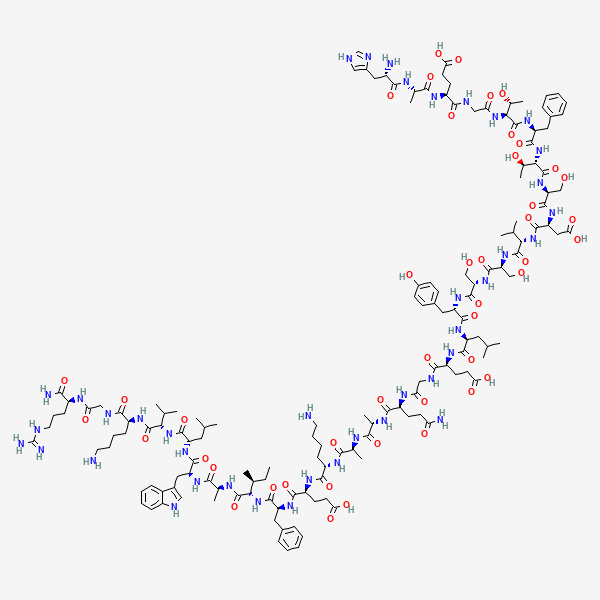
Two expert panels published consensus guidance on incretin-based therapy in the last three days of July, and both open by conceding the same thing: the evidence is not strong enough to support formally graded recommendations [1][2]. That admission is the story. Where a regulator would decline to act, professional societies are filling the space with expert opinion, and the resulting documents are now what clinicians in anaesthesia and reproductive medicine will actually work from.
For anyone qualifying peptide material or tracking the regulatory perimeter around GLP-1 receptor agonists in Europe, the practical signal is that guidance is being generated faster than outcome data, and that the guidance itself is explicit about which questions remain unanswered.
Perioperative: continue the drug, image the stomach
The Clinical Practice Guideline Committee of the Korean Society of Anesthesiologists issued consensus-based recommendations for preanesthetic gastric ultrasound and anaesthetic management of patients on GLP-1 receptor agonist-based therapy [1]. The framing is a familiar one: pulmonary aspiration during anaesthesia is uncommon but carries substantial morbidity and mortality, and adherence to fasting intervals does not guarantee an empty stomach in patients with delayed gastric emptying or on medications that impair gastrointestinal motility, GLP-1 RA-based therapies among them [1].
The committee's position on the drugs themselves is notable for what it does not say. Rather than recommending withdrawal before surgery, the special recommendations for patients on GLP-1 RA-based therapy emphasise continuation of these medications in most patients with individualised risk assessment, consideration of a 24-hour clear liquid diet, and use of gastric ultrasound where delayed gastric emptying is suspected [1].
The document covers indications for preanesthetic gastric ultrasound, examination principles and interpretation, integration of findings into perioperative decision-making, management when ultrasound is not feasible, and anaesthetic strategies for patients with a full stomach [1]. The authors state that the current evidence base remains insufficient to formally support evidence-graded clinical practice guidelines, that the recommendations were developed through expert discussion and review of a literature in which robust evidence is lacking, and that they are intended to support rather than replace clinical judgment [1].
Reproduction: 34 articles, half the questions unanswered
The second document is a systematic scoping review and consensus guideline on incretin-based medications in women and reproduction, produced by an international multidisciplinary expert group [2]. Its starting premise is that pregnancy concurrent with incretin-based medications is contraindicated because of unknown teratogenicity risk, as is breastfeeding [2].
The search was run on 23 July 2025 across several databases and grey literature sources, with two authors screening independently and two extracting data against a pre-defined proforma [2]. Thirty-four articles were included: 11 randomised trials, nine observational studies, two pharmacovigilance reviews, nine case reports or series, two animal studies and one ex vivo study [2]. No qualitative studies were identified [2].
The quantitative picture of the gap is unusually clear. Evidence was found for 18 of 32 research questions, or 56.3% [2]. Most studies related to preconception or pregnancy use; two addressed contraception and one addressed lactation [2]. The sample size of exposed pregnancies ranged from 1 to 4,267 [2]. Three studies reported exposure throughout pregnancy, three investigated postpartum use, and one — an animal study — had offspring data beyond birth [2]. No studies reported an increase in congenital anomalies [2]. Recommendations were made across contraception, preconception, nutrition, pregnancy monitoring, lactation and longer-term outcomes [2].
A single lactation study and two contraception studies is a thin base on which to write guidance for a drug class this widely used. The panel wrote it anyway, and flagged the evidence gaps alongside the recommendations [2].
An unauthorised formulation enters the same gap
The commercial pressure on that same perimeter is visible elsewhere. Pharmaceutical Technology reported that sublingual semaglutide, which does not hold marketing authorisation, is being offered to UK practices despite Novo Nordisk's concerns, and is touted to minimise gastric issues [7].
Set against the Korean consensus statement, the claim is worth reading carefully. The perioperative guidance treats impaired gastrointestinal motility as the mechanism that complicates fasting assumptions [1]; an unauthorised formulation marketed on the basis of reduced gastric effects is making a claim about that mechanism without the authorisation framework that would normally require it to be substantiated [7]. This is the same class whose therapeutic footprint has widened well past weight loss over the past month GLP-1 Research Widens Past Weight Loss: Prostate Tumours, Cognition, GIPR Circuits.
Where the class is heading clinically
A review of combination cardiometabolic therapy published on 18 July argues that SGLT2 inhibitors and GLP-1 receptor agonists confer complementary, non-redundant cardiovascular, kidney and metabolic benefits [8]. SGLT2 inhibitors primarily reduce hospitalisation for heart failure and slow kidney disease progression, while GLP-1 RAs more effectively reduce atherosclerotic events, particularly stroke [8]. Randomised data show each class retains benefit irrespective of background use of the other, supporting independent mechanisms, though whether this translates into reductions in hard outcomes is being tested prospectively [8]. The authors favour a phenotype-guided approach that reserves combination treatment for individuals with overlapping high-risk phenotypes [8].
Adjacent to that, the Spanish MEDFINE-RWD study enrolled 844 people with type 2 diabetes and chronic kidney disease initiating finerenone between June 2024 and December 2025 across eight centres [3]. Median age was 72 years, median follow-up 184 days, baseline eGFR 49 mL/min/1.73 m², baseline UACR 285 mg/g, and 77.8% were at high or very high KDIGO risk [3]. Finerenone was associated with a 34.5% median UACR reduction at six months, treatment persistence of 89.5%, and low incidences of hyperkalaemia (4.8%), major kidney events (0.9%) and major cardiovascular events (1.1%) [3]. It is a useful counterpoint: a class with randomised trial support generating a large real-world dataset, in contrast to the incretin reproductive literature, where the largest exposed-pregnancy cohort numbered 4,267 and most questions had no evidence at all [2][3].
Naming conventions are shifting underneath all of this
One further item bears on documentation practice. A dermatology review describes the 2021–2022 revision of the WHO International Nonproprietary Names system for monoclonal antibodies, which retired the universal -mab suffix and replaced it with four structure-based stems: -tug, -bart, -ment and -mig [4]. New stems have also entered practice for JAK inhibitors (-citinib), BTK inhibitors (-brutinib) and oral peptide receptor antagonists (-kinra) [4]. The review covers 26 approved agents, addresses biosimilar naming across FDA, EMA and CDSCO systems, and notes that two agents in current use — sonelokimab and certolizumab pegol — are structurally misclassified under their legacy -mab names [4]. The authors argue that nomenclature literacy directly affects adverse event attribution, biosimilar substitution decisions and pipeline evaluation [4].
What this means for qualification work
Three things follow for anyone maintaining documentation on peptide and biologic material in the EU.
- Consensus statements are not graded guidelines, and both of this week's documents say so in their own abstracts [1][2]. They should be logged as expert opinion, not as evidence-based standards, and both authoring groups anticipate revision — the Korean committee explicitly calls for refinement through prospective outcome-based studies [1].
- The
-kinrastem for oral peptide receptor antagonists is now live in the INN system [4]. Any internal nomenclature reference or specification template built before the 2021–2022 revision will misclassify agents assigned under the new stems, and the review identifies two agents already misclassified under legacy names [4]. - Unauthorised formulations of authorised molecules are circulating with mechanistic marketing claims attached [7]. Provenance documentation on semaglutide-related material is the only defence against that, and the distinction between an authorised medicinal product and material without marketing authorisation is the one that matters.
The pattern across the week is consistent. Clinical practice is running ahead of the evidence for incretin-based therapy, expert panels are writing the interim rules, and those rules are provisional by their authors' own account [1][2].
References
- Bang YJ, Choi JH, Min JJ, Park SY, Choi WK, Hwang JY, Koo BN.. Korean consensus-based recommendations for preanesthetic gastric ultrasound and anesthetic considerations for GLP-1 receptor agonist-based therapy: a consensus statement from Clinical Practice Guideline Committee of the Korean Society of Anesthesiologists — europepmc, 2026-07-30.
- Maslin K, Shawe J, Blowers S, Ceulemans M, Hart K, Schoenmakers S, Rottenstreich A, Hopper H, Jensterle M, Flynn AC, Siegelaar S, Bogaerts A, Douek I, Heslehurs. Incretin-Based Medications in Women and Reproduction: A Systematic Scoping Review and Consensus Guidelines for Clinical Practice — europepmc, 2026-07-29.
- Moreno-Pérez O, Tejera-Muñoz A, Tomás-Gómez P, Vázquez-San Miguel F, Soria-Utrilla V, Roldán-Sánchez AM, Sánchez-Baya M, Cárdenas-Salas J, Timón-Vázquez B, Gorg. Real-World Effectiveness and Safety of Finerenone in People With Type 2 Diabetes and Chronic Kidney Disease: A Spanish Multicentre Retrospective Observational Study (MEDFINE-RWD) — europepmc, 2026-07-30.
- Singh S, Sharma YK, Gupta A.. Decoding Biological Drug Names in Dermatology: The Post-2022 WHO Nomenclature Revision and Its Implications for Clinical Practice — europepmc, 2026-07-30.
- Palangka CRAP, Suzuki M, Kanai A, Nitta A, Takagi J, Hanaoka H.. Mirabody-IR700: A novel EGFR-targeting platform for photoimmunotherapy — europepmc, 2026-07-29.
- Sugiyama M, Ono D, Miyazaki S, Bentley GE, Ito H, Mieda M, Watanabe K, Nakamura W, Nakamura TJ.. GABAergic Signaling from Arginine Vasopressin Neurons in the Suprachiasmatic Nucleus Is Essential for Maintaining the Estrous Cycle in Mice — europepmc, 2026-07-29.
- Robert Barrie. Sublingual semaglutide offered to UK practices despite Novo Nordisk concerns — industry_pharmtech, 2026-07-31.
- Porterfield LR, Nadeem S, Swanson D, Hayek SS, Vaughan EM.. Combination cardiometabolic therapy in type 2 diabetes: optimizing SGLT2 inhibitor and GLP‑1 receptor agonist use — europepmc, 2026-07-18.