
Novo Nordisk Study Finds Follow-On Liraglutide Less Physically Stable Than Originator
An impurity and immunogenicity assessment of follow-on and compounded GLP-1 receptor agonists reports distinct impurity profiles and reduced physical stability for liraglutide follow-ons versus the originator, alongside four other liraglutide readouts.
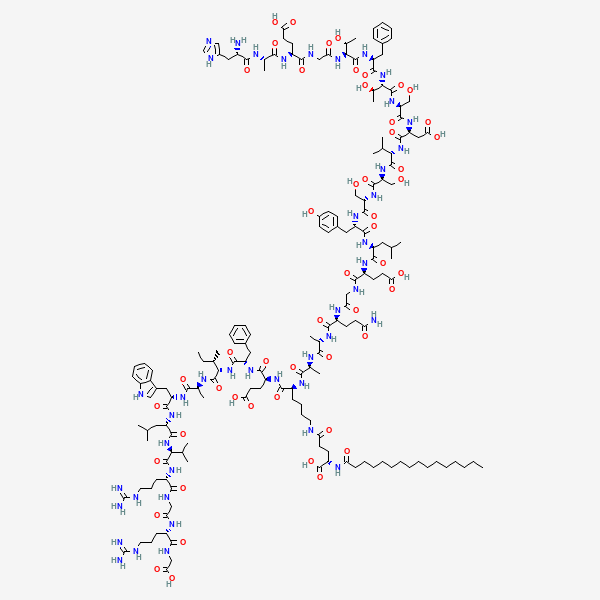
An assessment of impurity profiles and potential immunogenicity in follow-on and compounded glucagon-like peptide-1 receptor agonists reports that liraglutide follow-ons had reduced physical stability compared with the originator product [4]. The study, authored by a group including Kopp, Lamberth, Schelde and colleagues, covered both semaglutide and liraglutide and was posted on 30 July 2026 [4].
For anyone qualifying peptide material against a reference standard, the finding is the most operationally relevant liraglutide item to appear in the last two weeks. It is not a regulatory action, and it is a secondary report rather than a primary authority record, but it puts specific analytical language around a problem that procurement and QA functions have been handling by inference.
What the impurity assessment measured
The authors combined a major histocompatibility complex-II-associated peptide proteomics assay (MAPPs) with liquid chromatography-mass spectrometry, photostability testing and a fibrillation assay [4]. The MAPPs component used impurity-stimulated monocyte-derived dendritic cells from healthy donors [4].
For both semaglutide and liraglutide, various potentially immunogenic peptides were presented on those dendritic cells, with a distinct number and distribution compared with the originator products [4]. The follow-on drug substance and the follow-on or compounded finished products carried distinct impurity profiles versus the originators, described as amino acid deletions and additions plus unidentified impurities [4].
Two findings separate along product lines. Under light exposure, compounded semaglutide and originator products showed significant disparity in strength, impurity sum and high-molecular-weight protein level [4]. Separately, the liraglutide follow-ons had reduced physical stability versus the originator [4].
The authors conclude that the tested peptide impurities pose increased immunogenicity potential, and that the distinct profiles of follow-on and compounded products could be affected by the sourcing of the active pharmaceutical ingredient, the manufacturing process, and degradation during storage [4]. Their stated implication is the need for in vitro immunogenicity assays and clinical immunogenicity studies for GLP-1 RA follow-on or compounded products [4].
Three variables — API sourcing, process, and storage degradation — is a useful framing because each maps to a different document in a qualification file. API sourcing is a supplier question. Process is a batch record question. Storage degradation is a stability and transport question, and it is the one the fibrillation and photostability data speak to most directly [4].
Four other liraglutide readouts in the same window
The rest of the liraglutide record from late July and early August is mechanistic and clinical rather than analytical, and it continues the pattern of the class being tested well outside metabolic endpoints GLP-1 Research Widens Past Weight Loss: Prostate Tumours, Cognition, GIPR Circuits.
A study of diabetic kidney disease reports that liraglutide attenuates DKD by activating the NQO1/SIRT3 pathway, coordinating improved mitochondrial function with restoration of epigenetic homeostasis [2]. The work used HK-2 cells under glucolipotoxic conditions in vitro and a DKD rat model in vivo, assessing oxidative stress, apoptosis, mitochondrial dynamics (MFN1, MFN2, FIS1, DRP1), mitophagy (PINK1, PARKIN, LC3II/I, P62) and histone acetylation at H3K9, K14, K18 and K27 [2]. Genetic or pharmacological disruption of the NQO1/SIRT3 axis significantly attenuated liraglutide's efficacy, and combined inhibition abolished its effects entirely [2].
A separate microbiome study in diet-induced obese mice found that liraglutide induced significant weight loss by day 4, which persisted during treatment and partially reversed after treatment stopped [3]. Twenty-four male C57BL/6J mice were run on high-fat or low-fat diets over 21 days, with a high-fat subgroup receiving daily liraglutide for 14 days followed by a 7-day washout [3]. Gut bacterial community structure shifted during treatment and mostly returned to baseline after the washout [3]. Nine amplicon sequence variants related to Lactobacillus gasseri, L. paragasseri, L. johnsonii and Leptogranulimonas caecicola increased during treatment and declined post-washout, while twelve associated with Romboutsia, Faecalicatena and Oscillibacter decreased [3]. The reversibility of the microbial shift after a short washout is a data point of its own, and it sits alongside the broader question of what happens when GLP-1 dosing stops Semaglutide Withdrawal Trial Asks Whether Tapering Beats Stopping Cold.
Novo Nordisk A/S is recruiting a phase 1 interventional study examining how the duration of fasting and temporary cessation of GLP-1 medications affect residual gastric content in people using injected liraglutide, oral semaglutide or injected semaglutide, with planned enrolment of 71 [5]. Gastric emptying under fasting and drug-holiday conditions is precisely the parameter that perioperative guidance has had to address without graded evidence Consensus Statements Fill the GLP-1 Evidence Gap Regulators Have Not.
The LIGHT-MCI trial, an investigator-led randomised open-label parallel study run by The Affiliated Nanjing Drum Tower Hospital of Nanjing University Medical School, is listed as completed [6]. It compared liraglutide, empagliflozin and linagliptin on cognitive function in type 2 diabetes patients with mild cognitive impairment, across a 48-week core study and a 28-week extension, with planned enrolment of 396 [6].
A perspective piece on adolescents receiving GLP-1 therapy, covering semaglutide and liraglutide, argues that weight loss during a period of rapid muscle and bone accrual may attenuate that process and reduce peak musculoskeletal capacity [1]. The authors advocate integrating resistance training, weight-bearing activity and adequate protein intake with pharmacotherapy, and note that longitudinal pediatric data remain limited [1].
What this means for qualification files
The impurity work gives a concrete analytical vocabulary for material comparison: amino acid deletions and additions, unidentified impurities, high-molecular-weight protein content under light exposure, and fibrillation propensity [4]. Those are testable attributes, not abstractions, and a specification that does not address them is not addressing what this study found to differ between sources [4].
The reduced physical stability observed in liraglutide follow-ons is the point to carry into supplier assessment [4]. Physical stability is a function the recipient organisation can partly verify — through photostability and aggregation testing on incoming material — and one that the authors explicitly tie to storage-related degradation [4]. Where a liraglutide comparison is being made against an originator reference, the assessment argues that identity and assay data alone will not surface the differences that matter [4].
References
- Smith WA, Kim A, Khalil TJ, Giovinazzo C, Burton ET.. Protecting Musculoskeletal Development and Physical Function in Adolescents on GLP-1 Therapy — europepmc, 2026-08-03.
- Gao J, Lv X, Zhao P, Pan B, Liu J.. Liraglutide affects mitochondrial function and histone acetylation through the NQO1/SIRT3 pathway in diabetic kidney disease — europepmc, 2026-08-03.
- Bull J, Durham PL, Mirza BS.. Effects of liraglutide on gut bacterial community dynamics — europepmc, 2026-08-03.
- Kopp KL, Lamberth K, Schelde O, Øgendahl AK, Wojcieszek M, Mogensen JE, Ramírez-Andersen HS, Schneider CL, Staby A, Hach M.. Impurities and Potential Immunogenicity Associated With Follow-on and Compounded Glucagon-like Peptide-1 Receptor Agonists — europepmc, 2026-07-30.
- Novo Nordisk A/S. Examination of How the Duration of Fasting and Temporary Stopping of GLP-1 Medications Affect the Amount of Food Left in the Stomach in People Using Liraglutide (Injected), Semaglutide (Taken by Mouth) or Semaglutide (Injected) — clinicaltrials_gov, 2026-07-21.
- The Affiliated Nanjing Drum Tower Hospital of Nanjing University Medical School. LIGHT-MCI Trial: GLP-1 Agonist, SGLT2 Inhibitor, and DPP-4 Inhibitor for MCI Remission in Type 2 Diabetes — clinicaltrials_gov, 2026-07-23.