Orforglipron's Oral Chemistry Splits the GLP-1 Field Four Ways in MCDA Ranking
A comparative analysis published 20 October ranks tirzepatide first on efficacy and safety weightings but puts orforglipron top on accessibility, while October registry entries push GLP-1 agonism into endometrial neoplasia and tri-agonist first-in-human work.
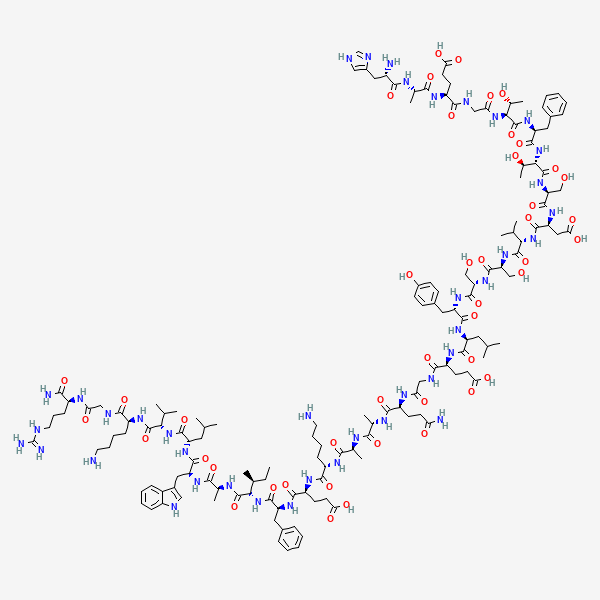
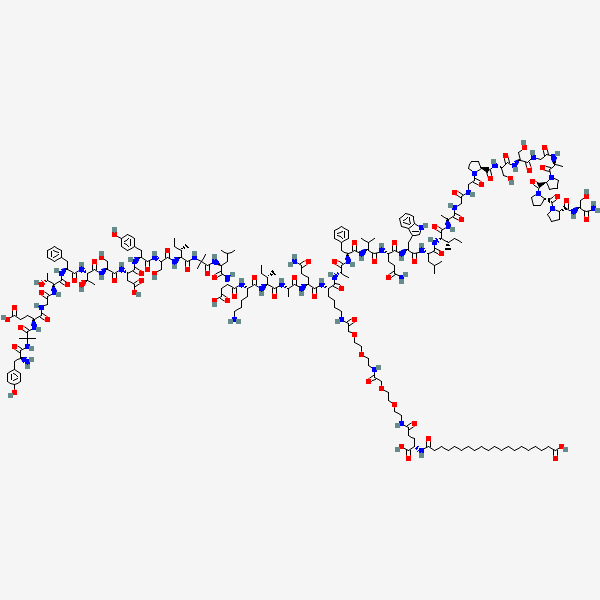
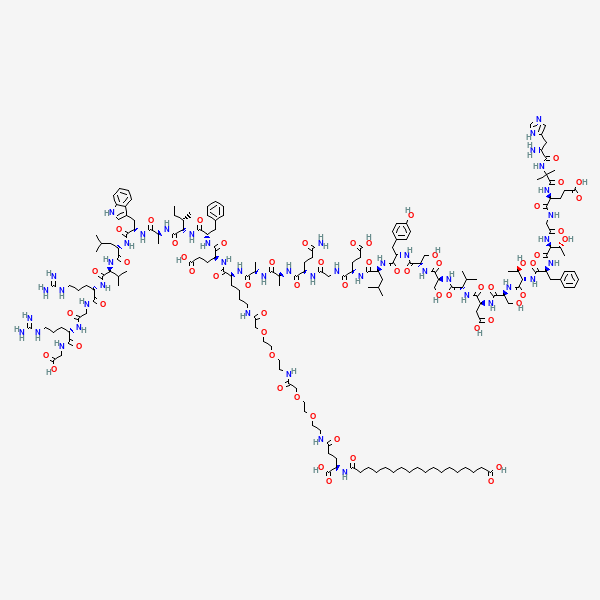
A comparative analysis indexed on Europe PMC on 20 October sets the first oral non-peptide GLP-1 receptor agonist to complete phase 3 testing, orforglipron, directly against the injectable agents semaglutide and tirzepatide [1]. The authors — Sahu and colleagues — combined clinical trial evidence, independently verified molecular descriptors, a drug-target-disease network with permutation-tested hub significance, hypergeometric pathway enrichment, and multi-criteria decision analysis across four weighting schemes with formal sensitivity analysis [1].
The result is not a single winner. Tirzepatide ranked highest under balanced, efficacy-dominant and safety-dominant models, once a composite ADMET score the authors judged misapplied to two large peptides was removed [1]. Orforglipron ranked highest under an accessibility-dominant model driven by oral feasibility and manufacturing scalability [1]. The rankings held under Monte Carlo sensitivity analysis for three of the four weighting schemes, with the balanced model described as comparatively fragile [1].
For anyone qualifying incretin material or tracking where the class is heading, the interesting line is the one about chemistry. Orforglipron's lipophilicity exceeds the Lipinski ceiling, which the authors read as evidence that its oral absorption reflects deliberate chemistry rather than default small-molecule developability [1]. That is a useful corrective to the assumption that an oral non-peptide agonist is simply the easy manufacturing route. The accessibility advantage the MCDA picks up is real, but it was engineered, not inherited.
The efficacy baseline the rankings rest on
The head-to-head anchor is SURMOUNT-5, in which tirzepatide produced significantly greater weight loss than semaglutide under randomised conditions — 20.2% versus 13.7% at week 72 [1]. Tirzepatide's cardiovascular evidence has also advanced, with SURPASS-CVOT reporting non-inferiority to dulaglutide [1]. The authors conclude that no single agent dominates every criterion and that treatment selection should match the clinical priority the individual patient weights most heavily [1].
That framing — efficacy, safety and accessibility as separable axes that different stakeholders weight differently — is familiar to anyone who has watched prescribing follow commercial rather than clinical logic, a pattern we covered in a UK self-pay cohort earlier this year A Million-Patient UK Cohort Shows GLP-1 Switching Tracks Price, Not Efficacy.
Initiation practice is its own variable
Among 48,658 adults with diabetes and/or obesity and no prior incretin therapy, 14.5% were started at high doses, defined as at least 1.0 mg per week [6]. The off-label high-dose regimen was associated with decreased one-year persistence and a 25% increase in early discontinuation risk (HR 1.25, 95% CI 1.17–1.34) [6]. The authors describe high-dose initiation as a modifiable risk factor [6].
This matters for interpreting any efficacy ranking. Real-world persistence is shaped by titration practice, not only by the molecule, and the gap between trial-protocol dosing and clinic behaviour is measurable. Dose-level questions in the class are not settled at the top end either, as a Japanese tirzepatide cohort we reported on indicated Low-Dose Tirzepatide Matched 5 mg on Weight Loss in a 112-Patient Japanese Cohort, nor at the point of stopping Semaglutide Withdrawal Trial Asks Whether Tapering Beats Stopping Cold.
Body composition and what comes after
They note that GLP-1 receptor agonists, dual GIP/GLP-1 agonists and triple GIP/GLP-1/glucagon agonists achieve placebo-subtracted weight loss of 15% to 22%, and that part of incretin-induced weight loss is lean tissue [4]. Whether the proportion of lean and muscle mass lost is greater than with other weight-loss interventions, and whether it causes clinically meaningful harm, is unknown [4].
Their proposal is that in men with obesity and low testosterone, combining incretin therapy with testosterone may preserve muscle mass and reduce fat-predominant regain after discontinuation [4]. The authors are explicit that the only direct human data come from a small, non-randomised pilot study and are hypothesis-generating, and that randomised trials with proper lean-mass assessment are required before the hypothesis can inform practice [4].
Kidney, gut and oncology endpoints
A real-world observational study followed 62 adults with CKD stages 1–5 who initiated tirzepatide for T2DM with concurrent obesity in a general nephrology clinic between June 2024 and October 2025, with a median follow-up of 21.4 weeks [3]. Median weight fell from 103 kg to 100 kg, and the authors report improvements in glycaemic control, albuminuria, lipid profile and insulin requirements without adverse effects on kidney function, recommending multidisciplinary oversight for introduction in CKD [3].
A companion review covers GLP-1 receptor agonists and multi-hormone receptor modulators in nondiabetic kidney disease [5]. It describes direct mechanisms including natriuresis through inhibition of NHE-3, modulation of glomerular haemodynamics via afferent arteriolar tone, and attenuation of renal inflammation, largely independent of glucose lowering [5]. Current efficacy evidence in people without diabetes rests on secondary kidney endpoints in phase 3 obesity and cardiovascular outcome trials, with dedicated outcome studies now underway [5].
Preclinical work from Koehler and colleagues shows that endogenous GLP-1R and GLP-2R signalling are essential for protecting the intestine from T cell-mediated enteropathy, with injury increased in Glp1r-/- and Glp2r-/- mice and in mice lacking intestinal proglucagon expression [8].
On the registry side, the University of Florida is recruiting a 20-patient phase 2 study of a GLP-1 receptor agonist given with a levonorgestrel intrauterine device in obese patients with endometrioid intraepithelial neoplasia who are poor surgical candidates or pursuing fertility sparing [7]. Separately, Zhejiang Doer Biologics has completed a 153-participant first-in-human phase 1 study of DR10624, an Fc fusion protein tri-agonist with balanced GLP-1R, glucagon receptor and FGF21 receptor activity delivered subcutaneously [2]. The widening of the class beyond metabolic endpoints is a trend we have tracked since July GLP-1 Research Widens Past Weight Loss: Prostate Tumours, Cognition, GIPR Circuits.
What this means for EU sourcing and qualification
The practical signal from the MCDA work is that "best agent" is now a function of which axis you weight [1]. A procurement or qualification file built around injectable peptide agonists faces a different analytical and supply profile from one built around an oral non-peptide whose absorption depends on deliberately engineered physicochemistry outside conventional small-molecule rules [1].
Meanwhile the comparator evidence that supports the class continues to come from secondary endpoints and short real-world cohorts — 62 patients at 21.4 weeks in the CKD series [3], 20 planned participants in the endometrial study [7], a single non-randomised pilot behind the testosterone hypothesis [4]. Analytical characterisation of the material itself, not the breadth of the indication list, remains the part a QA function can actually control Novo Nordisk Study Finds Follow-On Liraglutide Less Physically Stable Than Originator.
References
- Sahu L, Nayak L, Tripathy A, Ramachandiran S, Gunasekaran B, Lokaiah T.. Oral Versus Injectable Incretin-Based Anti-Obesity Therapies: An Integrated Computational and Evidence-Based Comparison of Orforglipron, Semaglutide, and Tirzepatide — europepmc, 2026-10-20.
- Zhejiang Doer Biologics Co., Ltd.. A First in Human (FIH) Study to Evaluate the Safety, Tolerability, Pharmacokinetics, and Pharmacodynamics of DR10624 — clinicaltrials_gov, 2026-10-19.
- Carruthers JE, Ooi XY, Goodall D, Reed J, Bedi R, McGrath A, Willicombe M, Avari P, Frankel AH.. Real-world observational study evaluating metabolic and kidney outcomes in patients living with chronic kidney disease and type 2 diabetes mellitus with obesity prescribed tirzepatide — europepmc, 2026-10-19.
- Zitzmann M, Bosnyak Z, Jones R, Caliber M.. Weight Regain After Incretin Treatment: The Lean Mass Deficit Hypothesis and a Role for Testosterone Combination Therapy in Men — europepmc, 2026-10-19.
- Pasricha SV, Faruque LI, Mohsen M, Brown TD, Yau K, Medak KD, Cherney DZI, Muskiet MHA, Odutayo A.. Glucagon-Like Peptide-1 Receptor Agonists and Multi-hormone Receptor Modulators for Kidney Protection in Nondiabetic Kidney Disease — europepmc, 2026-10-19.
- Belalcazar LM, Gao D, Modi S, Meer A, Kuo YF.. Real-World Semaglutide Initiation Behaviours in the United States: Impact on Early Treatment Discontinuation and on 1-Year Persistence — europepmc, 2026-10-19.
- University of Florida. A Study to Estimate Early Clinical Efficacy Signals of GLP-1 Agonist Administration in Conjunction With Levonorgestrel Intrauterine Device in Obese Patients With Endometrioid Intraepithelial Neoplasia — clinicaltrials_gov, 2026-10-21.
- Koehler JA, Baggio LL, Cao X, Shang R, Yusta B, Wong CK, Matthews D, Sandoval DA, Drucker DJ.. Gut-derived glucagon-like peptides attenuate T cell-induced intestinal injury — europepmc, 2026-10-20.