
Genetic Analysis Argues for Lower GIP While Tirzepatide Agonises the Receptor
A UK Biobank phenomic and Mendelian randomisation study links genetically lower GIP to reduced obesity and cardiovascular risk, published the same week as a review calling GIPR agonism versus antagonism the field's unsettled question.
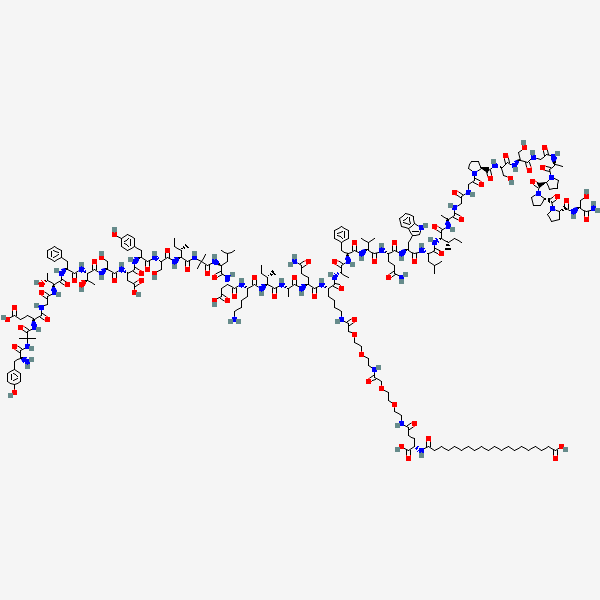
The most effective incretin drug on the market activates the GIP receptor [2]. A genetic analysis of 385,917 UK Biobank participants, published in late July 2026, is consistent with the hypothesis that lower physiological GIP levels are associated with lower body weight and better cardiometabolic phenotypes [5]. Both statements sit in the same week's literature, and the tension between them is now the organising question of GIP pharmacology.
For anyone qualifying incretin-family peptide material in the EU, this matters because it determines which molecular targets attract the next wave of preclinical demand — and whether the analytical and reference-standard requirements will centre on receptor agonists, antagonists, or both.
What the genetic evidence says
Wang and colleagues used tree-structured phenotypic modelling (TreeWAS) to map associations of GLP-1 and GIP levels against a broad range of disease outcomes in the UK Biobank cohort, followed by factorial Mendelian randomisation and mediation analysis [5]. The authors state plainly that it is highly controversial whether GIP agonists or antagonists should be developed, and what their clinical effects and side effects would be [5].
The TreeWAS results linked genetically determined low GIP levels to reduced risk of obesity, metabolic diseases including disorders of lipoprotein metabolism, and digestive, hepatic and cardiometabolic disease [5]. Elevated genetically predicted GLP-1 levels, even within the normal range, were associated with decreased risk of metabolic diseases such as type 2 diabetes and of polyarthropathies such as gout [5].
Combined exposure to genetically predicted higher GLP-1 and lower GIP was associated with additive reductions in obesity (HR 0.93, 95% CI 0.88–0.99, p = 0.018), cardiovascular disease (HR 0.97, 95% CI 0.94–0.99, p = 0.021) and venous thromboembolism (HR 0.91, 95% CI 0.83–1.00, p = 0.039), with multiplicative effects on composite hepatic events (HR 0.88, 95% CI 0.77–0.99, p = 0.040) [5]. No side effects on bone metabolism were identified [5]. Mediation analysis pointed to body weight as a potential mediator of the GIP-lowering associations with obesity, CVD, VTE and mortality [5].
The authors flag an important limitation on the GLP-1 side: the highest circulating GLP-1 levels in the cohort may reflect only minimal receptor activation, comparable to what DPP-4 inhibition achieves rather than the far higher exposures produced by GLP-1 receptor agonists [5]. They conclude that the observations warrant mechanistic and clinical investigation [5].
What the pharmacology review says
Nauck, Gribble, Reimann, D'Alessio and Campbell take the opposite starting point in a review published the following day [2]. They describe tirzepatide, a dual agonist engaging both GLP-1R and GIPR, as the most effective drug to date, and note that the relative contributions of GIPR and GLP-1R actions to its clinical effects have not been established [2]. The potency of the agent, they write, has reignited interest in the clinical potential of GIPR agonism [2]. Their review covers current and future applications of both GIPR agonists and antagonists [2].
A historical overview by Portha, published the same week, traces the line from the first demonstration of GLP-1's glucose-lowering effects in type 2 diabetes thirty years ago through DPP-4 inhibitors — which prevent inactivation of both GLP-1 and GIP — to the monomeric multi-incretin receptor agonists [3]. That review names the GLP-1/GIP dual agonist tirzepatide and the GLP-1/GIP/glucagon triple agonist retatrutide as capable of more than 20% weight loss in obesity [3]. We have covered the widening research front around GIPR circuits and non-metabolic endpoints previously GLP-1 Research Widens Past Weight Loss: Prostate Tumours, Cognition, GIPR Circuits.
So the field is simultaneously producing genetic evidence that lower GIP tone is favourable and clinical evidence that pharmacological GIPR activation, in combination with GLP-1R activation, is the most potent option available. Neither line resolves the other. The unresolved contribution of GIPR to tirzepatide's effect [2] is precisely what the genetic work cannot address.
Real-world dispensing and safety signals
Against that mechanistic uncertainty, exposure is scaling. Omura and Kamihara analysed fiscal year 2024 injectable-drug quantity tables from Japan's 11th National Database of Health Insurance Claims Open Data, covering all six approved Mounjaro strengths [4]. The primary outpatient total was 7,829,974.7 kit units, of which 6,748,743.5 kit units (86.2%) were dispensed outside medical institutions [4].
Between June 2024 and March 2025, monthly quantity rose from 392,354 to 1,027,955 kit units [4]. Over the same interval the quantity represented by strengths of 7.5 mg or higher rose from 50,902 kit units (13.0%) to 246,316 kit units (24.0%), while the 2.5 mg product's share fell from 40.6% to 27.1% even as its absolute quantity increased [4]. The 5 mg product accounted for 320,965 kit units, or 50.5%, of the absolute increase [4]. The authors are explicit that this is an auditable national description of dispensing setting and product mix, not an analysis of patient uptake, adherence or clinical outcomes [4]. That upward strength drift sits alongside separate Japanese cohort work on where the dose ceiling actually needs to be Low-Dose Tirzepatide Matched 5 mg on Weight Loss in a 112-Patient Japanese Cohort.
Safety reporting is accumulating in parallel. Iqbal, Javed and Oyibo describe a 75-year-old woman with type 2 diabetes, hypertension, obesity, chronic kidney disease and post-surgical hypothyroidism and hypoparathyroidism who developed severe symptomatic hypercalcaemia one month after starting tirzepatide while taking bendroflumethiazide, calcium carbonate and alfacalcidol [7]. Her calcium had been in the normal treatment range before initiation, other causes were ruled out, and levels normalised after intravenous fluids and withdrawal of tirzepatide, bendroflumethiazide and calcium carbonate [7]. The authors suggest serum calcium monitoring in comparable clinical scenarios [7].
Adjacent evidence
Quan and colleagues pooled four arms from three trials (209 participants) reporting standardised ad libitum lunch intake in adults on GLP-1 or dual GIP/GLP-1 receptor agonists, finding a treatment difference of −1132 kJ (95% CI −1449 to −815), approximately −271 kcal, with no heterogeneity [8]. The semaglutide-versus-tirzepatide difference was not significant (p = 0.154) [8]. Sixteen studies entered the systematic review; the authors note that real-world habitual intake remains underreported [8].
Two further reports extend the class beyond metabolic endpoints. Zhang and colleagues review preclinical spinal cord injury data in which GLP-1 and GIP receptor agonists shifted microglia and macrophages toward anti-inflammatory phenotypes, suppressed apoptosis, increased autophagy and promoted axonal regeneration, with dual agonists showing superior efficacy in related neurological disorders [6]. They call for mechanistic elucidation, dose optimisation and validation in large animal and human studies [6]. Separately, White and colleagues report a 15-case exploratory study in which AI-enabled chest x-ray staging of pulmonary venous hypertension was assessed before and after GLP-1 or GLP-1/GIP receptor agonist therapy; post-therapy, 4 cases improved, 5 were stable and 6 worsened [1]. The authors state that confirmation or disproof awaits a larger controlled prospective study [1].
Implication for EU sourcing and qualification
The practical read is that GIP is no longer a single-direction target. A review by leading incretin pharmacologists treats agonism and antagonism as parallel development paths [2], and a large genetic study offers support for the antagonist hypothesis on obesity and cardiometabolic endpoints [5]. Preclinical programmes drawing on either direction will need GIP-related peptide material characterised against the receptor pharmacology they are actually probing, not against a generic incretin assumption.
Meanwhile the dual-agonist safety literature is broadening into interactions — calcium homeostasis in renal impairment being one documented example [7] — and consensus documents have already acknowledged that the evidence base is thinner than clinical use requires Consensus Statements Fill the GLP-1 Evidence Gap Regulators Have Not. Anyone qualifying research-use material in this class should expect specification and identity requirements to track a moving mechanistic target rather than a settled one.
References
- White RD, Demirer M, Erdal BS, Lin G.. AI-enabled chest x-ray potentially detects subclinical diastolic dysfunction in diabesity and monitors its functional responses to GLP-1 or GLP-1/GIP receptor agonists: initial exploration and proof-of-concept — europepmc, 2026-08-02.
- Nauck M, Gribble F, Reimann F, D'Alessio DA, Campbell JE.. Clinical Potential of GIP in Type 2 Diabetes and Obesity — europepmc, 2026-08-01.
- Portha B.. [An historical overview of GLP-1/GIP incretins. From hormone to "swiss-army knife" medications] — europepmc, 2026-07-31.
- Omura T, Kamihara T.. Outpatient Dispensing Patterns and Changes in Tirzepatide Strength Mix in Japan: A Study Using the National Open Claims Data — europepmc, 2026-07-30.
- Wang L, Jiang F, Yuan S, Sun J, Zhao J, Zhou S, Liang J, Li H, Song P, Wang S, Dong J, Zhan S, Larsson SC, Xie Y, Ding Y, Li X, Mantzoros CS.. Complementary body weight and cardiometabolic benefits of higher GLP-1 and lower GIP: Genetic evidence from large-scale phenomic analyses — europepmc, 2026-07-30.
- Zhang S, Liu S, Zhou M, Wang J, Zhang Y, Zhong H, Ning G.. The Pleiotropic Therapeutic Perspectives of GLP-1 and GIP Receptor Agonists in Spinal Cord Injury: A Narrative Review — europepmc, 2026-07-31.
- Iqbal S, Javed F, Oyibo SO.. A Case of Severe Hypercalcemia in a Patient Taking Tirzepatide: Potential Risk Factors — europepmc, 2026-07-26.
- Quan AT, Nguyen HL, Nguyen TMT.. Nutritional intake changes during GLP-1 receptor agonist therapy: A systematic review and meta-analysis — europepmc, 2026-07-25.